

Your bookkeeping is completely fine, but you have no real idea what your cash flow will look like nine months from now. If that sentence makes your stomach drop, you are living the classic mid-market scaling dilemma. Your tax accountant tells you what you spent last quarter, but no one is telling you what you can afford to spend next quarter. You are stuck in historical reactive mode when what you actually need is forward-looking forward visibility.
For a long time, the only solution to this problem was writing a massive offer letter for a full-time, corporate-level finance executive, complete with hefty equity grants and benefits. Today, mid-market founders and operators are leaning into a highly efficient alternative: the choice to Hire Fractional FP&A teams.
An outsourced strategic planning partner Denver or anywhere else across the country acts as the missing translation layer between raw bookkeeping data and complex executive decisions. Instead of hiring a lone analyst who lacks strategic depth, or an expensive strategist who refuses to build spreadsheets, growth-stage firms look to specialized groups like Altevius Partners to gain an institutional-grade corporate finance department on a fractional footprint.
Quick Summary: When to Hire Fractional FP&A
- The Core Trigger: You have clean historical books but no reliable forward-looking visibility, dynamic scenario models, or reliable rolling cash flow forecasts.
- The Analytical Gap: Bookkeepers look backward; Financial Planning & Analysis (FP&A) teams build dynamic, multi-variable projections for future growth.
- Resource Efficiency: A fractional team delivers enterprise-grade forecasting, board decks, and unit economic tracking without the multi-six-figure fixed cost of a permanent internal hire.
- Core Scaling Signals: 1. Investor models failing scrutiny; 2. Guesswork replacing data in operational strategic decisions; 3. Founder drowning in spreadsheet management; 4. Bookkeeping metrics clashing with real-world cash availability; 5. Post-funding deployment outstripping internal bandwidth.
The Core Triggers: 5 Unmistakable Signals It Is Time to Hire Fractional FP&A
Over a decade of structural advising shows that businesses do not break down randomly; they break down at predictable operational inflection points. When your revenue climbs but your clarity drops, it is usually a sign that your financial architecture needs an upgrade.
Here are the five distinct scale signals that indicate your enterprise requires sophisticated finance capabilities.
1. Your Financial Models Fail under Investor Scrutiny
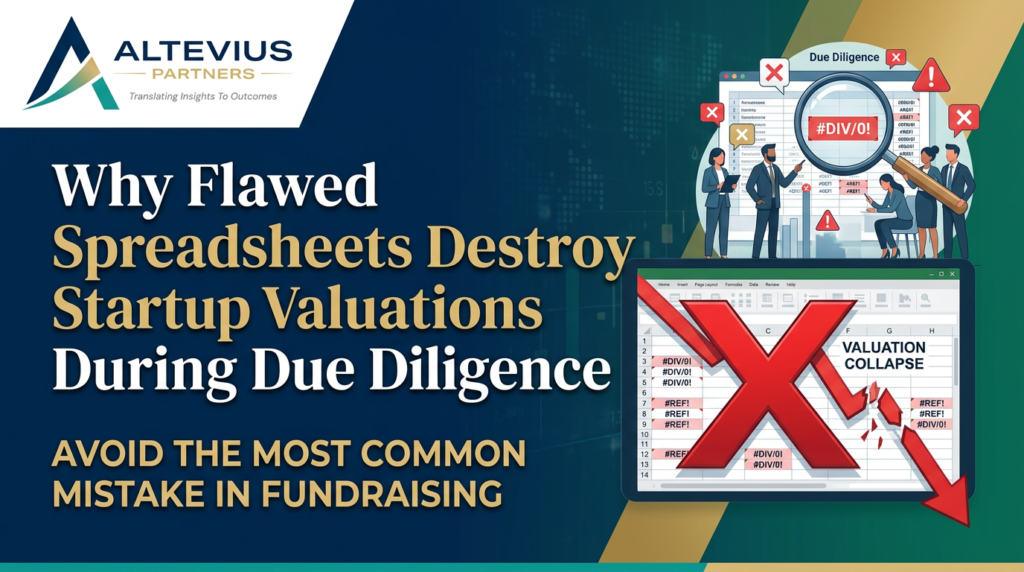
If you are preparing for a capital raise, institutional lenders and venture funds expect more than a simple static spreadsheet. They want to see interconnected drivers, dynamic sensitivity analyses, and clear capital allocation logic.
When you outsource fp&a financial modeling, you move away from vulnerable formulas toward robust models that can withstand institutional diligence. A weak model breaks the moment an investor alters a variable like customer acquisition cost or customer churn rate. A professional model shows exactly how those shifts impact your runway, headcount plan, and cash position. The true cost of fractional fpa team for series A preparations is a tiny fraction of the equity value lost if a critical funding round stalls due to messy documentation.
2. Gut-Feeling Decision Making Replaces Data-Driven Strategy
Early on, founders manage by instinct, and it works. But once you cross into multi-million dollar territory, operating by feel becomes incredibly dangerous.
If you find yourself guessing how many inventory units to purchase for Q3, estimating whether you can afford three new executive hires, or blindly pricing a new product line, your growth has outpaced your data. A dedicated virtual fpa specialist for growing business steps in to replace guesswork with quantitative clarity. They turn hard-to-read operational data into dynamic rolling forecasts, giving you clear boundaries for capital expenditure before you make major commitments.
Raw Accounting Data ➔ Fractional FP&A Engine ➔ Dynamic Rolling Forecasts ➔ Data-Driven Decisions
3. The CEO Spends More Time in Spreadsheets Than Leading
Your highest value as a founder or executive lies in strategy, market positioning, culture, and high-level execution. If you spend your Sunday nights fixing broken spreadsheet formulas, building ad-hoc capital tables, or trying to reconcile bank accounts against operational metrics, you have stepped out of your zone of genius.
The opportunity cost here is massive. Every hour you spend acting as a junior financial analyst is an hour you are not dedicating to closing big deals or driving product vision. Bringing in a modern team allows you to delegate spreadsheet ownership to specialists who build these systems for a living, giving you back your time to run the business.
4. Mismatched Cash Flow Realities vs. Bookkeeping Reports
It is a frustrating paradox: your accrual profit and loss statement says you are highly profitable, yet your corporate bank account feels completely empty. This common mismatch happens because standard accounting looks backward to record past transactions, whereas FP&A focuses on future runway.
Without a clear forward view, you cannot easily tell how collections, inventory cycles, and capital investments will impact your actual liquidity ninety days from now. An expert team reconciles these differences, giving you a crystal-clear look at future cash flow so you never get caught off guard by a sudden liquidity crunch.
5. Post-Funding Growth Explodes Past Internal Capabilities
Winning a major funding round or securing a significant line of credit is an incredible milestone, but it also brings intense pressure. Suddenly, you have to scale operations, build new teams, and enter new markets all at the same time.
Without professional guardrails, newly raised capital can burn out far faster than expected. The period right after funding requires tight capital controls, budget vs. actual variance reporting, and constant scenario planning. A fractional team provides the necessary operational safety rails, making sure every dollar spent directly supports your long-term valuation goals.
Choosing the Right Structure: Fractional CFO vs. Fractional FP&A Team
A common point of confusion for growing companies is deciding when to hire a fractional cfo or fpa team. Many executive leaders assume that bringing in an independent strategic consultant will instantly solve all their financial headaches. In reality, these two roles handle completely different parts of your corporate finance engine.
- The Fractional CFO: Focuses heavily on top-tier strategy. They manage capital structure, negotiate complex debt facilities, lead M&A discussions, handle board relationships, and guide major fundraising rounds. They operate at the 30,000-foot level.
- The Fractional FP&A Team: Represents the operational engine room. They manage the heavy lifting of building data architecture, creating financial models, tracking key metrics, updating rolling forecasts, and building monthly variance reports.
If you hire a standalone CFO without analytical support, you often end up with an expensive executive who spends their valuable time building basic spreadsheets, or one who asks you to hire someone else to handle the data preparation. Conversely, hiring a solo junior analyst means you get spreadsheets without the high-level strategic insight needed to guide executive choices.
To solve this dilemma, many scaling mid-market enterprises opt for a fractional cfo and fpa bundle pricing model. This structural approach gives you access to a senior strategist for board meetings and capital events, backed by dedicated analysts who keep your data systems running smoothly.
Additionally, if your business goes through sudden transitions, utilizing an interim fpa director Atlanta or a remote director-level lead can bridge the executive execution gap without locking you into a long-term, expensive full-time contract.
Specialized Support for High-Growth Hubs
Regional market conditions introduce unique operational challenges that require a deep understanding of local business ecosystems. Even though modern financial tools operate in the cloud, having financial partners who understand the specific dynamics of your region is a huge asset.
East Coast Growth Hubs
In mature financial ecosystems, companies leveraging fractional financial planning and analysis NYC systems focus heavily on highly efficient unit economics and sophisticated capital optimization. Whether you are scaling a fast-growing B2B software model or expanding an asset-light services firm, East Coast markets demand rigorous capital efficiency and clear, institutional-grade board metrics from day one.
West Coast Scale
Technology firms, direct-to-consumer brands, and venture-backed operations regularly look to hire fractional fp&a team California experts. These fast-moving markets require agile forecasting models capable of adapting to rapid user growth, shifting supply chains, and fast capital deployment cycles where runway expectations can change in a weekend.
Midwest and Southern Expansion
The landscape is shifting rapidly outside the traditional coastal tech centers. Industrial technology platforms, logistics companies, and expanding enterprise software companies are heavily utilizing strategic finance consultant Texas teams and fractional corporate financial planning Chicago structures. These businesses focus heavily on cash flow sustainability, capital expenditure tracking, and building resilient operations designed to withstand shifting macroeconomic cycles.
Custom Regional Solutions for Distributed Teams
Modern mid-market enterprises frequently operate across state lines with distributed teams, multiple entities, and localized customer bases. Managing these structures requires financial models that can adapt to different regional real-world requirements.
             ┌─── small business fractional fp&a Boston (Life Sciences/Tech)
             │
National ────┼─── fractional budget forecasting services Florida (E-comm/Logistics)
Framework    │
             ┼─── fractional financial analyst Seattle (SaaS/Cloud Metrics)
             │
             └─── outsourced strategic planning partner Denver (Energy/Scaling B2B)
- Life Sciences & Biotech: Firms often require localized small business fractional fp&a Boston support to carefully manage complex multi-year clinical runway models, grant tracking, and specialized laboratory capital expenditures.
- E-Commerce and Logistics: Networks expanding through the Sunbelt utilize fractional budget forecasting services Florida to build resilient working capital models, manage inventory cycles, and navigate seasonal shifts in demand.
- Enterprise Cloud Platforms: Organizations scaling in northern tech hubs frequently use a skilled fractional financial analyst Seattle to closely track advanced recurring revenue metrics like net revenue retention, customer lifetime value, and complex multi-year contract renewals.
The Financial Blueprint: What to Expect on Cost and Implementation
Transitioning to a professional fractional model is a structured, collaborative process designed to minimize disruption while maximizing clarity. A professional firm does not just hand you a static folder of templates; they embed themselves into your operational workflow.
The First 30 Days: Integration and System Architecture
During the initial onboarding phase, the focus centers entirely on data integrity, tool integration, and structural alignment:
- System Integration: Connecting your historical accounting tools (like QuickBooks Online or NetSuite) directly to modern, dynamic forecasting platforms.
- Data Standardization: Cleaning up historical chart of accounts anomalies to make sure your past data aligns perfectly with your future strategic goals.
- Driver Identification: Collaborating directly with your operations heads to isolate the real core drivers of your revenue and expenses.
Clear Cost Structure vs. Full-Time Internal Overhead
Building out an internal corporate finance department carries substantial long-term financial commitments:
| Resource Option | Average Annual Cash Outlay | Equity Incentive | Scalability Speed |
|---|---|---|---|
| Full-Time CFO + Internal Analyst | $350,000 – $500,000+ | Significant (1% – 5%) | Slow (Months to source & hire) |
| Fractional FP&A Team Framework | Variable Fractional Retainer | None Required | Immediate (Days to deploy) |
Choosing a modern fractional approach delivers institutional-grade modeling and advisory support at a predictable investment level, entirely free from the long-term burden of executive benefits, signing bonuses, and permanent equity dilution.
Tailored Scalability with Altevius Partners
Every business follows a unique growth path. A bootstrap-funded services company needs a completely different financial framework than a venture-backed infrastructure business prepping for an international expansion.
Altevius Partners builds custom corporate finance solutions mapped precisely to your current operational scale. By delivering seasoned fractional support tailored to your exact operational requirements, they ensure your leadership team gains access to sophisticated forward-looking visibility, actionable unit economic insights, and robust strategic models. This approach empowers your company to make confident, data-backed decisions every step of the way, keeping your growth path clear and fully funded.
A fractional CFO focuses on high-level corporate financial strategy, investor relations, and capital raising. In contrast, a fractional FP&A team acts as the operational data engine, building the actual financial models, tracking key metrics, and generating rolling forecasts. While a CFO guides big-picture executive decisions, the FP&A team provides the quantitative data architecture and deep analysis required to validate those choices safely. Many growing mid-market companies choose an integrated bundle of both roles to get strategic oversight alongside execution.
A startup should upgrade from basic bookkeeping to fractional FP&A services when historical accounting reports no longer provide enough visibility to make safe forward-looking decisions. If your books are clean but you cannot accurately project your runway, model future hiring impacts, or confidently forecast cash flow nine months out, you have hit the trigger point. Additional scale signals include preparation for an institutional Series A round, founder burnout from managing complex spreadsheets, or cash balances that regularly conflict with accrual profit metrics.
The cost of a fractional FP&A team varies based on the operational complexity of the business and the required depth of the engagement, but it typically scales as a predictable monthly fractional retainer. This investment is significantly lower than hiring a permanent corporate finance department. A full-time internal finance executive team easily requires an annual cash outlay of $350,000 to $500,000 plus substantial equity dilution, whereas a fractional model provides identical analytical precision on a flexible footprint without long-term overhead liabilities.
Yes, a seasoned virtual FP&A specialist utilizes cloud-based infrastructure to build accurate, highly localized financial models tailored to specific regional markets. Top-tier advisory groups like Altevius Partners structure remote engagements that integrate directly with local market data. This allows them to build target corporate forecasting frameworks optimized for high-growth ecosystems like NYC, tech-driven modeling requirements in California and Seattle, or specialized capital expansion budgets for growing firms across Texas, Chicago, and Denver.
The first 30 days of an outsourced FP&A engagement focus on data integration, system architecture, and identifying operational drivers. The team connects your historical accounting tools to modern forecasting platforms, standardizes your past charts of accounts to ensure clean data integrity, and collaborates with department heads to isolate core growth variables. By the end of this initial onboarding phase, the system transitions from historical tracking to generating actionable rolling forecasts and institutional-grade financial models.