
Over the past ten years advising early-stage tech ventures, I have sat across the desk from hundreds of brilliant founders whose eyes glaze over the moment we open their financial model. Usually, it is a massive, multi-tab Excel spreadsheet built at midnight three weeks before a pitch meeting, filled with rigid formulas that break the second a single customer delays an invoice.
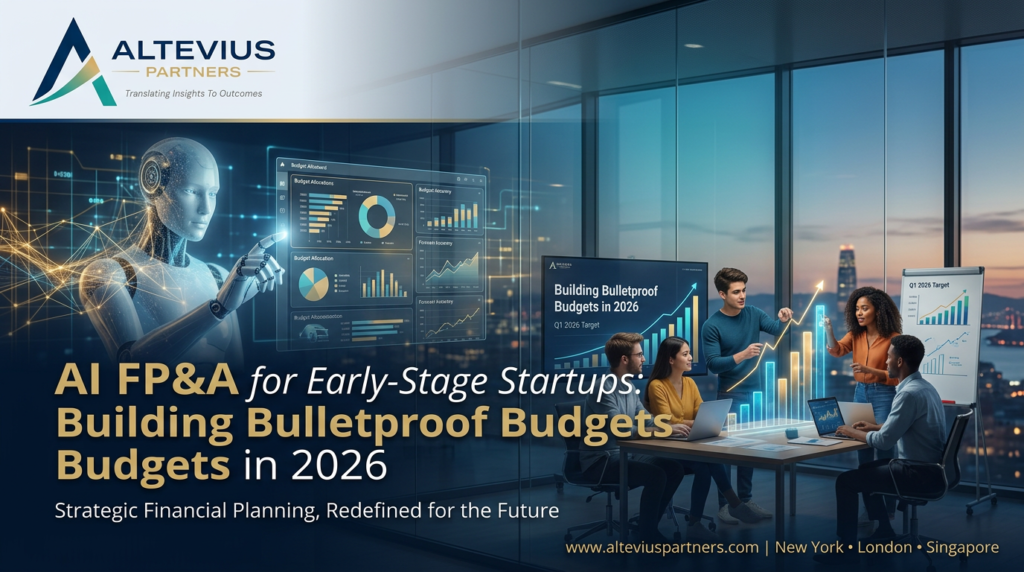
In today’s hyper-volatile market environment, relying on static backward-looking sheets is no longer just risky; it is an existential threat to your runway. Early-stage companies need a smarter way to manage cash, project revenue, and survive economic swings without spending half their engineering budget on manual number-crunching. This shift is where modern AI FPA changes the rules of the game, helping modern founders move from reactive guesswork to proactive, real-time financial control.
Quick Summary
- What is AI FPA? The integration of machine learning and automated algorithms into financial planning and analysis to replace manual spreadsheets.
- Key Benefits: Real-time cash runway monitoring, automated variance analysis, and instant predictive scenario modeling for startups.
- Why It Matters in 2026: Early-stage companies face rapid market shifts; static budgets lead to sudden cash crunches, while predictive tools extend runway by months.
- Core Implementation: Connect live bank and Stripe accounts, build bottom-up machine learning revenue models, and pair software insights with expert fractional guidance from Altevius Partners.
Why Traditional Startup Forecasting Fails in Modern Markets
The hidden cost of static Excel templates during unexpected cash crunches
Every founder knows the pain of the master spreadsheet. You spend days linking cells, pasting historical bank data, and creating hockey-stick growth curves. Then reality hits. A major enterprise client delays payment by sixty days, or AWS bills double unexpectedly because of a scaling bug. Suddenly, your carefully formatted cell formulas break, and your projected cash runway shrinks from twelve months to four overnight. Static models give founders a false sense of security because they assume a linear path in a non-linear world. When macroeconomic shocks happen, static templates cannot adapt fast enough to give you actionable warning signals.
Read more: Why Profitable Australian Businesses Still Run Out of Cash And How a Fractional CFO Fixes It
Why manual variance tracking wastes weeks of engineering and finance time
In many early-stage startups, financial tracking falls on a co-founder or a stretched-thin operations manager who spends the first five days of every month pulling CSV files from Stripe, Mercury, and QuickBooks. They spend hours manually reconciling why actual cloud spending exceeded the budget. This manual exercise is an enormous drain on productive hours. When your engineering leads or product managers are pulled into reconciling expense line items instead of building product, your company is leaking intellectual capital on administrative busywork that algorithms can solve in seconds.
The shift from historical backward-looking accounting to real-time predictive modeling
Traditional bookkeeping tells you where your money went last month. Great leadership requires knowing where your money is going next week. The fundamental flaw of legacy accounting is its rearview-mirror perspective. Early-stage businesses operate with too much volatility for historical averages to matter. If your customer acquisition cost (CAC) jumped 30% this week, waiting until monthly closing to notice will burn through your seed capital before you can adjust your marketing spend. Moving to real-time predictive modeling allows founders to catch anomalies early and shift resources before a minor leak turns into a financial emergency.
Core Capabilities of Modern AI FPA Platforms
Automated Data Ingestion and Clean Reconciliation
- Connecting live bank accounts, Stripe, and ERP systems without human entry errors: Modern automated tools plug directly into your payment gateways, business bank accounts, and payroll providers via secure APIs, pulling clean transaction data into a unified dashboard without a single copy-paste keystroke.
- Continuous transaction monitoring to catch leakages before burn rate spikes: Instead of waiting for monthly bank statements, automated alerting systems flag unusual vendor billing jumps or duplicate SaaS charges the day they occur.
- Eliminating version control nightmares across multiple co-founder spreadsheets: No more guessing whether “Final_Budget_v4_revised_FINAL.xlsx” or “Master_Model_Draft_2.xlsx” is the correct board deck version; cloud-native systems maintain a single source of truth for the entire leadership team.
Machine Learning Revenue Projections for SaaS Startups
- Modeling complex churn patterns, cohort retention, and expansion MRR accurately: Machine learning algorithms look deep into historical usage patterns to spot subtle churn indicators long before a customer formally cancels their subscription.
- Factoring macroeconomic volatility directly into pricing and customer acquisition forecasts: Advanced predictive models automatically adjust sales pipeline conversion probabilities based on broader industry benchmarks and real-time sales cycle shifts.
- Building reliable bottom-up SaaS metrics that institutional investors actually trust: Institutional venture capitalists can instantly spot top-down guesswork; providing clean, algorithmically validated cohort economics builds immediate credibility during Series A due diligence.
Step-by-Step Blueprint: How to Build a Startup Financial Model with AI
Setting Up Initial Assumptions and Historical Baselines
- Feeding past unit economics into machine learning algorithms for baseline calibration: Start by feeding your last twelve months of burn data, customer acquisition costs, and gross margins into your forecasting tool so the algorithm understands your baseline operational velocity.
- Defining realistic growth ceilings based on current team capacity and pipeline data: Avoid wishful thinking by letting predictive algorithms analyze your current sales rep capacity and historical conversion rates to establish grounded growth ceilings.
- Establishing core operational cost categories without missing hidden SaaS overhead: Map fixed overhead, payroll, and the sprawling ecosystem of micro-SaaS subscriptions that quietly bloat operating expenses every month.
Read more: Decoding SAFE Notes vs. Priced Equity Rounds: What Indian Founders Must Choose for Seed Fundraising
Dynamic Scenario Modeling for Series A Preparation
- Simulating best case, base case, and severe downside scenarios in under five minutes: Instead of rebuilding separate Excel tabs for every board meeting, use automated parameter sliders to instantly test how a 25% drop in enterprise sales impacts your cash reserves.
- Stress-testing your runway against delayed customer payments and market downturns: Model worst-case collection cycles to ensure your business maintains a safe liquidity buffer even if enterprise clients stretch payment terms to 90 days.
- Presenting data-driven growth levers that impress venture capital partners during due diligence: When investors ask how you plan to reach profitability, walking them through dynamic, stress-tested scenario models shows a level of operational maturity that separates exceptional founders from the rest.
Actionable Strategies to Reduce Burn Rate Using Predictive Analytics
- Spotting hidden subscription creep and vendor cost inflation automatically: Automated systems flag unused software licenses and creeping third-party service fees, saving thousands in silent overhead every quarter.
- Optimizing working capital cycles to protect short-term liquidity reserves: Predictive cash flow forecasting highlights exact dates when receivables and payables clash, giving you time to optimize collection terms before hitting a cash crunch.
- Utilizing predictive cash flow forecasting to extend runway by critical months: By identifying subtle inefficiencies in your cost structure early, predictive analytics often uncovers enough hidden capital to extend your operational runway by three to six crucial months.
Implementing AI-Driven Financial Planning and Analysis Best Practices
- Establishing weekly automated check-ins between actual spend and forecasted models: Move away from sluggish quarterly reviews by setting up automated weekly variance digests that highlight exactly where spending deviated from expectations.
- Training non-financial founders to read and interpret automated variance reports: Modern financial tools translate complex accounting jargon into intuitive visual dashboards, making it easy for technical founders to understand gross margins and unit economics without a finance degree.
- Balancing automated algorithmic insights with human strategic judgment: Algorithms provide speed and precision, but deciding whether to pivot your go-to-market strategy based on those insights remains a human leadership responsibility.
Scaling Your Finance Function with Altevius Partners
- When early-stage teams need fractional CFO oversight alongside automated software: Software gives you the speed, but strategic capital allocation requires seasoned eyes, especially when navigating complex fundraising milestones or cross-border expansion.
- How Altevius Partners helps founders combine advanced AI models with expert capital strategy: Working with strategic advisors ensures your automated financial stack aligns perfectly with investor expectations, regulatory requirements, and long-term growth objectives.
- Structuring your financial stack for sustainable growth and smooth future funding rounds: Building a bulletproof budget today creates a transparent financial foundation that positions your startup for successful, high-valuation funding rounds tomorrow.
How does AI FPA actually differ from traditional Excel financial modeling for early-stage startups?
Traditional Excel modeling is static, manual, and backward-looking. A founder builds a multi-tab sheet based on historical averages, and the moment a client delays an invoice or AWS costs spike, the formulas break. AI-powered financial planning and analysis connects directly to your live bank accounts, Stripe, and ERP systems. It runs continuous, real-time predictive analytics, automatically updates your cash runway, and lets you run complex scenario simulations in seconds rather than spending days rebuilding rows of data.
Can early-stage startups with limited financial data effectively use AI forecasting tools?
Yes, because modern predictive tools do not require years of historical data to deliver value. Even with six months of transaction history, machine learning algorithms can analyze your current cash burn velocity, variable customer acquisition costs, and recurring subscription patterns to spot leakage and forecast short-term cash flow with far greater accuracy than human guessing. The system learns and refines its baseline projections automatically as your transaction volume grows.
What are the key indicators that signal a startup needs to upgrade from basic spreadsheets to automated FP&A?
You have outgrown spreadsheets the moment your co-founders or operations managers spend more than four hours a week manually pulling CSV files, reconciling bank statements, and arguing over which version of the financial model is correct for a board meeting. Other red flags include missing subtle vendor subscription creep, getting surprised by sudden cash crunches despite strong revenue growth, or struggling to produce reliable SaaS unit economics during investor due diligence.
How do automated financial planning tools help founders reduce their monthly burn rate?
Automated platforms act as an early-warning radar system for your bank account. Instead of finding out at month-end that software subscriptions have ballooned or third-party API costs have doubled, predictive analytics flag anomalous spending spikes the day they happen. By continuously monitoring working capital cycles and highlighting idle overhead, these tools frequently surface enough operational savings to extend an early-stage company’s runway by three to six months.
Why do institutional investors and venture capitalists prefer AI-validated startup financial models?
Venture capitalists review hundreds of pitch decks and can spot top-down, hockey-stick Excel guesswork immediately. AI-backed financial models provide bottom-up rigor based on clean transaction ingestion, realistic cohort retention curves, and stress-tested downside scenarios. When founders can present dynamic models that instantly show how market downturns or delayed enterprise sales impact their burn rate, it signals high operational maturity and builds immediate trust during Series A funding rounds.