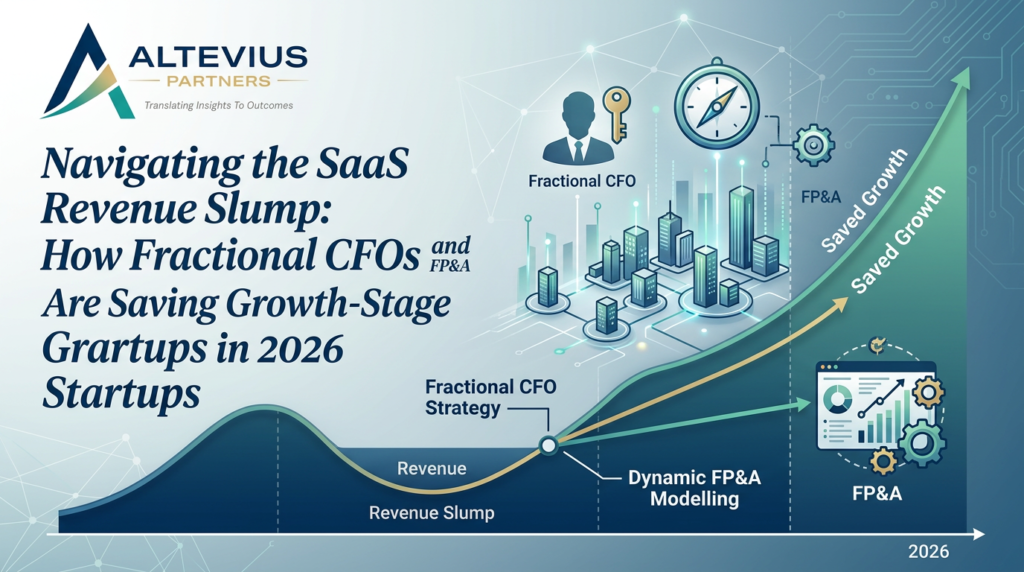


A Fractional CFO is an experienced corporate financial executive who provides high-level strategic leadership, cash flow optimization, unit economics analysis, and fundraising support to growing businesses on a part-time, retainer, or contract basis. Instead of taking on a full-time executive compensation package, growing US companies hire a fractional financial leader to access institutional-grade guidance at a fraction of the traditional cost.
When I talk with founders navigating rapid growth, one issue comes up constantly: the business outgrows basic bookkeeping long before it can justify a full-time CFO salary. You do not need a $350,000 corporate executive sitting in your office 40 hours a week to manage simple cash flow. However, you do need someone who can build a 13-week rolling forecast, clean up your margins, and present solid numbers to investors. That is where a Fractional CFO steps in.
+------------------------------------------------------------------------+
|                      FRACTIONAL CFO VALUE VALUE                        |
+------------------------------------------------------------------------+
|  Bookkeeper / Controller              Fractional CFO                   |
|  (Past-Focused Compliance)    --->    (Future-Focused Growth Strategy) |
|  - Tax Prep & Payroll                 - Runway Extension               |
|  - Historical Financials              - Capital Raising & Board Decks  |
|  - Invoice Processing                 - Unit Economics & Pricing       |
+------------------------------------------------------------------------+
Key Benefits for Fast-Growing Companies
- Massive Cost Savings: Access senior executive financial strategy without paying a full-time salary, equity allocation, healthcare, or performance bonuses.
- Proactive Strategic Planning: Move past backward-looking accounting to focus on 12-month financial forecasting, cash runway extensions, and profitability modeling.
- Investor & Board Readiness: Build institutional-grade financial models, pitch deck financials, and data rooms that earn confidence from venture firms, private equity, and lenders.
- Scalable Engagement: Adjust your monthly hours up or down based on current company milestones, capital raises, or seasonal shifts.
2. Understanding the Strategic Role of a Modern Financial Leader
What Is a Fractional CFO?
To understand what is a fractional cfo, it helps to look at how modern finance leadership operates. A Fractional CFO is an executive strategic partner embedded directly within your leadership team. They do not spend their days filing receipts or manually reconciling transactions. Instead, they translate raw financial data into clear operational moves.
Having advised leadership teams through various market cycles over the past decade, I have seen how the right financial guidance completely changes a company’s trajectory. A fractional leader gives you the executive presence required during board meetings or bank negotiations, operating on a flexible schedule that fits your exact capital constraints.
Core Focus Areas Across Business Stages
Different growth phases require different financial strategies:
- Early-Stage & Seed Startups: Focus on establishing clear cash burn rate visibility, extending runway, shaping early unit economics, and building pitch decks for early investors.
- Series A to Series C Companies: Focus on scaling accounting infrastructure, creating multi-scenario revenue models, managing investor communications, and optimizing working capital.
- Established SMBs ($2M–$25M Revenue): Focus on expanding gross margins, analyzing product-line profitability, negotiating senior debt facilities, and preparing for strategic M&A or exit opportunities.
In practice, firm partners like those at Altevius Partners step into these roles to help founders make fast, data-backed decisions without hiring an expensive internal finance team too early.
3. Core Responsibilities: What Does a Fractional CFO Do?
+------------------------------------------------------------------------+
|                     CORE FRACTIONAL CFO DELIVERABLES                   |
+-----------------------------------+------------------------------------+
| Strategic Planning & Forecasting  | Capital Strategy & Investor Support|
| - 13-Week Cash Flow Models        | - Pitch Deck Financials            |
| - Scenario & Runway Planning      | - Debt & Equity Structuring        |
| - Unit Economics Optimization     | - Board Deck Preparation           |
+-----------------------------------+------------------------------------+
| Performance Management            | Operations & Risk Guardrails       |
| - Custom KPI Dashboards           | - Vendor & Contract Negotiation    |
| - Departmental Budget Oversight   | - Tax Strategy & Audit Readiness   |
| - Gross Margin Analysis           | - Financial Systems Integration    |
+-----------------------------------+------------------------------------+
When clients ask what does a fractional cfo do day-to-day, I point to four primary areas: strategic planning, capital advisory, performance tracking, and risk management.
Strategic Financial Planning & Cash Management
- 13-Week Rolling Cash Flow Forecasting: Predict weekly cash inflows and operational expenses to protect your business against unforeseen shortfalls.
- Scenario & Runway Modeling: Build dynamic growth models showing best-case, base-case, and downside financial trajectories to survive economic changes.
- Budget vs. Actual (BvA) Analysis: Track departmental spending monthly to identify cost overruns before they ruin your quarterly earnings.
Growth, Unit Economics, and Investor Relations
- Unit Economics & Margin Optimization: Uncover your exact Customer Acquisition Cost (CAC), Lifetime Value (LTV), payback periods, and gross margins.
- Fundraising Preparation: Design audit-ready financial models and board presentations tailored for venture capital or private equity due diligence.
- Capital Allocation: Determine the right split between non-dilutive debt financing, equity dilution, and reinvested profits to fund expanding operations.
Providing tailored fractional cfo services allows leadership teams to hand off heavy financial modeling so the CEO can focus on product development and customer acquisition.
4. Comparing Leadership Roles: Fractional, Full-Time, Interim, & Outsourced
Navigating executive finance options can be confusing. Here is how a Fractional CFO compares to other common arrangements:
| Feature / Metric | Fractional CFO | Full-Time CFO | Interim CFO | Outsourced CFO / Controller |
|---|---|---|---|---|
| Primary Focus | Ongoing Strategic Leadership | Complete Executive Ownership | Short-Term Crisis / Transition | Back-Office Compliance |
| Typical Hours | 10–40 hours per month | 160+ hours per month | 40+ hours per week (temporary) | Operational task-based |
| Average Cost Range | $3,500 – $10,000 / month | $250,000 – $400,000+ / year base | High daily/hourly rate | $1,500 – $4,000 / month |
| Equity Requirement | None (or minimal advisory shares) | Significant equity stake (1%–2%+) | None | None |
| Ideal Business Stage | $1M – $25M Revenue / Seed to Series B | $25M+ Revenue or Late-Stage | M&A, Restructuring, Gap Filling | Under $2M Revenue |
Fractional CFO vs. Full-Time CFO
When evaluating a fractional cfo vs full time cfo, the main factors are cost and total workload. A fractional cfo salary footprint is a fraction of a full-time executive’s overall package.
A permanent, full-time financial executive in the US commands a base pay between $250,000 and $400,000 annually, plus performance bonuses, benefits, and equity. Early and mid-stage growth companies rarely have 160 hours per month of executive-level work, making a full-time hire premature.
Interim CFO vs. Fractional CFO
Comparing an interim cfo vs fractional cfo comes down to timing and duration:
- Interim CFO: Steps in full-time for a brief period (3 to 9 months) during a transition, such as an executive departure, an urgent restructuring, or a major M&A deal.
- Fractional CFO: Integrates into the business as a long-term partner on a recurring, part-time schedule (e.g., 2 days a month or 10 hours a week).
Outsourced CFO vs. Fractional CFO
Understanding an outsourced cfo vs fractional cfo means looking at historical tasks versus forward strategy:
- Outsourced Accounting/Controller Services: Focus primarily on past performance reconciling books, handling payroll, generating monthly balance sheets, and filing tax returns.
- Fractional CFO: Focuses on forward strategy forecasting runway, managing capital efficiency, raising funds, and driving market valuation.
5. Cost Breakdown: Fractional CFO Rates & Pricing Structures
Understanding market rates helps you budget effectively without overpaying for financial expertise.
+------------------------------------------------------------------------+
|                 MONTHLY RETAINER ESTIMATES BY STAGE                    |
+-----------------------------------+------------------------------------+
| Early-Stage / Pre-Seed Startups   | $3,000 - $5,000 / month            |
| (Light Guidance, Runway Focus)    | (~8 to 15 hours/month)             |
+-----------------------------------+------------------------------------+
| Growth-Stage Startups & SMBs      | $5,000 - $8,500 / month            |
| ($2M - $10M Revenue)              | (~15 to 25 hours/month)            |
+-----------------------------------+------------------------------------+
| Scaling Companies & Series A+     | $8,500 - $15,000+ / month          |
| (Complex Operations, M&A, VC)     | (~25 to 40+ hours/month)           |
+-----------------------------------+------------------------------------+
2026 Average Cost Benchmarks
- Hourly Rates: Standard fractional cfo rates range from $175 to $450+ per hour, depending on industry specialization, firm location, and advisor background.
- Monthly Retainer Models: Typical fractional cfo pricing falls between $3,000 and $12,000+ per month for an ongoing scope of work.
- Project-Based Pricing: One-time projects such as setting up financial models for a capital raise or running M&A due diligence cost between $5,000 and $25,000+.
The overall fractional cfo cost usually pays for itself quickly when an advisor finds hidden cash, cuts unnecessary software expenses, or renegotiates credit lines.
Factors Influencing Pricing
- Industry Complexity: Technical sectors like SaaS, fintech, healthcare, and manufacturing require specialized knowledge around revenue recognition, inventory accounting, or compliance, leading to higher rates.
- Current Financial State: A company that needs fast turnaround work or heavy balance sheet cleanup will require more time up front than one with organized books.
- Hands-on Execution vs. High-Level Advisory: Strategic oversight costs less than an arrangement where the CFO leads junior finance staff, handles vendor calls, and leads board discussions.
6. When to Hire a Fractional CFO: Critical Trigger Points
Timing is everything in business. Hiring financial guidance too early wastes capital; hiring too late can lead to dangerous cash flow issues.
                      +----------------------------+
                      | GROWTH & CAPITAL TRIGGERS  |
                      +-------------+--------------+
                                    |
            +-----------------------+-----------------------+
            |                                               |
            v                                               v
+-----------------------+                       +-----------------------+
|  FINANCIAL MESSINESS  |                       |   EXPANSION & SCALE   |
| - Unclear cash runway |                       | - Preparing Series A  |
| - Declining margins   |                       | - Product line growth |
| - Surprises at year   |                       | - Entering new markets|
|   end tax filing      |                       | - M&A opportunities   |
+-----------------------+                       +-----------------------+
Key Signs Your Company Is Ready
- Unclear Cash Visibility: You make core business decisions based on current bank account balances rather than forward cash flow forecasts.
- Active Fundraising: Venture capital funds, angel syndicates, or commercial banks demand institutional financial models, clear KPI tracking, and professional due diligence materials.
- Growth Without Profit: Sales revenue is increasing every month, but profit margins are shrinking and cash balances remain flat.
- CEO Operational Overwhelm: Knowing when to hire a fractional cfo often comes down to founder time. If the CEO spends 10+ hours a week juggling financial spreadsheets and payroll issues, it is time to bring in professional support.
By bringing in a fractional cfo for startups during early growth phases, founders can keep their time focused on sales, hiring, and product execution.
7. Strategic Framework: Hiring & Vetting the Right Executive
Finding the right advisor requires clear criteria. You need someone who understands your operational model, not just traditional corporate accounting.
Sample Scope of Work & Job Description Template
When drafting a fractional cfo job description, keep the scope focused on strategic metrics:
- Primary Objective: Deliver senior financial leadership, safeguard corporate cash flow, and build scalable financial systems.
- Key Responsibilities:
- Build, maintain, and present rolling 12-month financial models.
- Manage working capital, dynamic cash forecasts, and corporate liquidity.
- Oversee external bookkeepers, controllers, and tax specialists.
- Present monthly board packages and financial reviews to executives and investors.
Essential Vetting Checklist for Founders
When hiring a fractional cfo, use this framework to evaluate candidates:
- Industry Alignment: Have they worked directly with companies sharing your business model, customer acquisition cycles, and cost structures?
- Tool Stack Proficiency: Do they work smoothly with modern financial platforms like QuickBooks Online, Xero, NetSuite, Mosaic, Jirav, or Cube?
- Proven Track Record: Can they share clear case studies where their guidance directly extended cash runway, improved margins, or closed investment rounds?
- Communication Style: Can they explain complex corporate finance topics in plain, actionable language that non-financial founders can understand?
Targeted guidance tailored for a fractional cfo for small business ensures your leadership team gets strategic insight suited to your size rather than overly complex corporate processes.
8. Real-World Case Studies: How Fractional CFOs Drive ROI
Case Study A: SaaS Startup Extending Cash Runway
- The Challenge: A Seed-stage B2B SaaS company had 6 months of cash remaining and needed to stretch operations to hit growth metrics for a Series A raise.
- The Strategic Intervention: A fractional financial leader audited software vendor spending, shifted annual SaaS contracts to upfront payments, and restructured the sales compensation model around cash collection.
- The Result: Extended operational runway by 5 months without staff cuts, allowing the team to cross $2M in ARR and secure a Series A round on strong terms.
Case Study B: E-Commerce Brand Unlocking Gross Margins
- The Challenge: A direct-to-consumer brand generating $5M in annual revenue saw record order volume, but cash reserves remained low due to rising product costs.
- The Strategic Intervention: The strategic advisor completed a detailed SKU-level contribution margin analysis, uncovering unprofitable product lines, high shipping costs, and inefficient ad spend.
- The Result: The brand phased out underperforming SKUs, negotiated better supplier volume discounts, and increased bottom-line net margin by 4.5 percentage points within 90 days.
9. Key Takeaways & Action Plan for Business Owners
- Identify Your Real Need: Determine whether your financial bottlenecks come from historical bookkeeping (which requires a bookkeeper/controller) or forward strategy (which requires a fractional executive).
- Organize Your Current Financials: Ensure your monthly books are updated and reconciled so your strategic advisor can focus immediately on high-value growth initiatives.
- Select a Clear Engagement Model: Choose a predictable monthly retainer tied to specific deliverables to align incentives and keep costs controlled.
If your growing business needs higher-level financial strategy, clearer cash flow forecasting, or support for an upcoming capital raise, partnering with an experienced advisory firm like Altevius Partners can provide the institutional expertise you need to scale with confidence.
Accounting firms focus on historical compliance organizing past transactions, issuing monthly balance sheets, and filing annual tax returns. A fractional CFO looks entirely forward. They partner with your executive team to model future scenario plans, stretch existing cash runways, structure capital raises, and optimize unit economics like customer acquisition cost (CAC) and customer lifetime value (LTV). While accountants record what already happened, a fractional CFO helps you decide what to do next.
It depends entirely on your current operational complexity and strategic milestones. Most growing startups and small businesses require anywhere from 5 to 15 hours per week (or roughly 10 to 40 hours per month). During major strategic events—like an active fundraising round, a core software transition, or annual budgeting—the hours temporarily scale up. Once systems stabilize, the engagement dials back down to a steady strategic cadence, keeping your overhead predictable.
Fractional CFOs frequently manage the entire financial side of fundraising. They build investor-ready 3-statement financial models, clean up data rooms for formal due diligence, prepare board deck financial slides, and draft repayment schedules for commercial lenders. Having a seasoned financial executive present during investor Q&A sessions signals to venture capital funds and banks that your business operates with mature institutional discipline.
No, they actually make your current accounting team significantly more effective. Your bookkeeper or controller continues managing day-to-day transaction processing, invoicing, and monthly closes. The fractional CFO steps in above that layer to translate those financial reports into strategic action items. They provide high-level leadership and oversight, ensuring your internal team follows proper controls and aligns their reporting with executive growth targets.
Size isn’t strictly measured in headcount; it’s measured by financial complexity and growth velocity. Typically, companies generating between $1 million and $25 million in annual revenue benefit most. However, early-stage Seed or Series A startups with significant venture funding often hire one much earlier to manage cash burn rate and runway long before reaching $1 million in revenue. If you are making critical business decisions based on your current bank balance rather than a dynamic 13-week forecast, you are ready.