
Over the past ten years advising founders, institutional investors, and family offices, I have noticed a recurring pattern. A brilliant tech entrepreneur or a seasoned manufacturing veteran builds an incredible enterprise, yet when asked what their company is actually worth, they freeze. They point to last year’s revenue or a vague gut feeling. In today’s hyper-competitive corporate environment, gut feelings will not survive a rigorous due diligence audit by a venture capital firm or tax authorities. Understanding the true economic weight of your enterprise requires a structured approach. This guide examines how Business Valuation Services India transform raw financial records into a clear strategic compass.
Key Takeaways:
- Core Focus: Professional valuation is essential for fundraising, regulatory compliance, and strategic M&A across India.
- Key Methodologies: Analysts utilize Discounted Cash Flow (DCF), comparable company metrics, and asset-based frameworks depending on company maturity.
- Regional Expertise: Specialized hubs like Mumbai, Bengaluru, Delhi NCR, Jaipur, Hyderabad, and Chennai require localized regulatory and ecosystem awareness.
- Strategic Partnering: Firms like Altevius Partners bridge the gap between complex financial modeling and actionable corporate strategy.
Introduction to Business Valuation Services India
Why accurate business valuation forms the foundation of modern financial decision-making
Every major corporate milestone, whether issuing sweat equity to early employees, raising Series A capital, or preparing for an Initial Public Offering, begins with a defensible number. If your valuation is inflated, you risk scaring away smart capital or triggering severe tax penalties under regulatory frameworks. If it is too low, you surrender an unnecessary amount of equity. Accurate valuation gives stakeholders an objective baseline. When I worked with a mid-sized logistics firm a few years back, getting their baseline right prevented a messy founder dispute during a secondary share sale.
The shift from theoretical number crunching to strategic corporate assessment
Valuation used to be a back-room exercise performed by accountants using rigid, textbook formulas that ignored market realities. Modern corporate worth assessment is entirely different. It looks beyond historical balance sheets to evaluate intangible assets, brand equity, customer acquisition costs, and future cash flow potential. It is less about ticking compliance boxes and more about understanding what makes your business valuable to an active buyer in the open market.
How independent advisory firms like Altevius Partners help founders and investors navigate complex financial ecosystems
Navigating India’s multi-layered regulatory environment requires seasoned judgment. Independent advisory firms step in to cut through the noise. By combining quantitative rigor with qualitative market intuition, teams at Altevius Partners help stakeholders defend their numbers against aggressive investor negotiations and stringent tax scrutiny, ensuring that the valuation stands up to real-world pressure.
Core Startup Valuation Methods India
Navigating early-stage ambiguity without relying on guesswork
Valuing a pre-revenue or early-stage venture can feel like trying to nail jelly to a wall. Founders often ask me how to price a company that only exists as a slide deck and a prototype. The secret is shifting from historical financial statements to future potential and risk mitigation.
Discounted Cash Flow models for businesses with visible cash flow projections
For mature businesses or scaling startups with predictable revenue streams, the Discounted Cash Flow (DCF) model remains the gold standard.
- Forecasting Free Cash Flows: Projecting operational cash flows over a 5-to-10-year horizon.
- Determining the Discount Rate: Applying a Weighted Average Cost of Capital (WACC) that reflects operational risks in the Indian market.
- Terminal Value Calculation: Estimating the business’s worth beyond the explicit forecast period using perpetual growth assumptions.
Benchmarking against market peers through comparable company analysis
When financial projections feel too uncertain, market multiples provide a reality check. By studying publicly traded competitors or recent private market transactions in your sector, analysts derive valuation multiples like Price-to-Earnings (P/E) or Enterprise Value-to-EBITDA. If similar software-as-a-service companies in India trade at six times forward revenue, your valuation will naturally anchor around that benchmark, adjusted for your specific growth rate.
Adjusting metrics for pre-revenue enterprises, intellectual property, and team experience
For early-stage ventures, standard multiples often fail. Here, methodologies factor in qualitative components:
- The Scorecard Method: Comparing the startup against average funded startups in the region based on team strength, market size, and product differentiation.
- IP Valuation: Assigning economic worth to proprietary software code, patents, or unique manufacturing processes.
- Founder Pedigree: Factoring in the execution track record of the founding team, which significantly reduces perceived execution risk for early-stage investors.
Fair Market Value Calculation for Shares
Why share price determination matters for tax compliance, fundraising, and internal restructuring
In India, the valuation of shares is not just a commercial exercise; it is heavily regulated. Whether you are issuing shares to foreign investors under FEMA guidelines or allocating shares to domestic employees, getting the fair market value calculation for shares wrong can invite scrutiny from tax authorities regarding perceived undervaluation or excess premium. Proper documentation protects the company from unexpected tax liabilities.
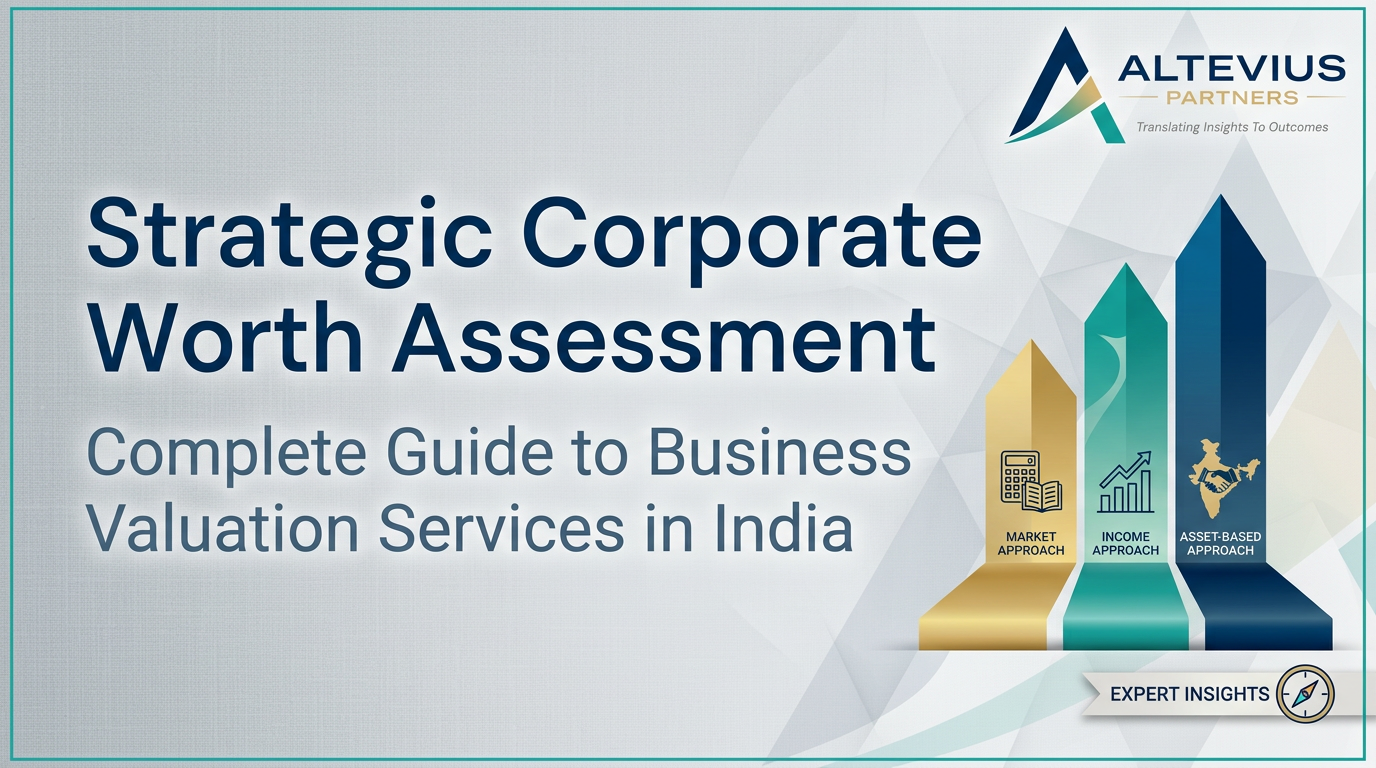
Breaking down asset-based, income-based, and market-based approaches
Valuation professionals typically rely on three primary pillars when determining share value:
- Asset-Based Approach: Evaluates the net asset value of the firm, ideal for capital-heavy or liquidating businesses.
- Income-Based Approach: Focuses on the earning capacity of the enterprise, capturing future cash generation capabilities.
- Market-Based Approach: Relies on direct market comparisons and recent transaction pricing.
Handling equity dilution during early and growth-stage capital raises
Every time new capital flows in, the cap table shifts. Founders must understand how pre-money and post-money valuations dictate dilution. I frequently advise founders to look past the headline valuation number and examine liquidation preferences, anti-dilution clauses, and participating preferred rights, as these terms heavily impact true equity value during an exit.
Avoiding common pitfalls when setting strike prices for employee stock options
Setting the strike price for Employee Stock Ownership Plans (ESOPs) too low creates immediate perquisite tax burdens for employees under Indian tax laws. Conversely, setting it too high destroys the incentive value of the stock option. Using a certified valuation report ensures the exercise price aligns legally with the fair market value of the underlying shares.
Cost of Business Valuation Report India
Understanding what factors influence advisory fees and project scope
When budgeting for corporate advisory work, founders often ask about the cost of business valuation report india. Fees vary widely based on several distinct factors:
- Complexity of the Business: SaaS models with complex deferred revenue schedules require deeper analysis than single-asset real estate firms.
- Purpose of the Valuation: A simple internal pricing estimate costs less than a transaction-grade report meant to withstand institutional due diligence or cross-border regulatory review.
- Timeline Constraints: Expedited reports requested within tight windowframes naturally command higher professional fees.
Distinguishing between basic compliance reports and transaction-grade valuation deliverables
It is vital not to cut corners on compliance documentation. A basic regulatory filing report may satisfy minimum statutory requirements, but it will collapse under the weight of a Series B investor’s forensic audit. Transaction-grade reports provide comprehensive sensitivity analyses, detailed methodology disclosures, and robust defense files that give institutional investors confidence.
Timeframes and documentation required to complete a valuation engagement smoothly
A standard valuation engagement usually takes between one to three weeks. To keep the process moving efficiently, management teams must prepare core documents in advance:
- Audited financial statements for the past three years.
- Detailed management projections and business plans with underlying assumptions.
- Cap tables outlining current shareholding patterns.
- Contracts highlighting major customer concentrations or proprietary intellectual property.
Regional Financial Hubs and Advisory Ecosystems
Corporate Valuation Consultants in Mumbai
Addressing the financial and capital market demands of India’s commercial capital
Mumbai is the undisputed financial epicenter of the country, housing major stock exchanges, private equity funds, and multinational banks. Corporate valuation consultants in mumbai operate in a high-stakes ecosystem where precision and speed are mandatory. Whether structuring a multi-crore corporate merger or preparing an enterprise for public listing, advisory teams here deal extensively with complex capital structures and deep regulatory oversight.
Supporting large corporate transactions, private equity deals, and cross-border expansions
Transactions originating out of Mumbai often involve international stakeholders, cross-border tax considerations, and complex debt-equity mixes. Local valuation experts coordinate closely with legal counsel and investment bankers to ensure every asset, from trademark portfolios to overseas subsidiaries, is accurately priced into the final deal structure.
Startup Equity Valuation Services Jaipur
How emerging business hubs are accessing structured financial guidance locally
The startup narrative in India is no longer confined to Tier-1 metropolitan areas. Emerging innovation clusters are growing rapidly, driven by regional entrepreneurship. Founders seeking startup equity valuation services jaipur no longer need to rely solely on remote advisors. Local accessibility to sophisticated financial modeling ensures that regional enterprises scaling traditional manufacturing, D2C retail, or tech-enabled services can secure institutional funding on par with national peers.
Tailored advisory solutions for regional founders scaling into national markets
Jaipur-based businesses often blend traditional brick-and-mortar strengths with modern digital distribution. Valuation experts in the region understand how to price traditional inventory assets alongside growing digital brand equity, helping regional founders negotiate confidently as they expand their footprint nationally.
Tech Startup Valuation Firms Bangalore
Valuing high-growth SaaS, fintech, and deep-tech business models
As India’s Silicon Valley, Bengaluru generates a continuous stream of venture-backed technology companies. Tech startup valuation firms bangalore specialize in untangling complex recurring revenue models, multi-tier subscription contracts, and high burn-rate growth phases. Valuing a deep-tech startup with multi-year R&D expenditure requires an entirely different lens than evaluating a steady-state IT services firm.
Accounting for recurring revenue metrics, customer acquisition costs, and churn rates in valuation math
In Bengaluru’s tech ecosystem, valuation models rely heavily on operational unit economics:
- Annual Recurring Revenue (ARR): Tracking predictable subscription streams.
- Customer Acquisition Cost (CAC) vs. Lifetime Value (LTV): Measuring long-term customer profitability.
- Net Revenue Retention (NRR): Evaluating how effectively the company expands account revenue over time.
Business Valuation Services Delhi NCR
Navigating the regulatory and institutional funding environment across Delhi, Noida, and Gurugram
The National Capital Region represents a unique mix of massive corporate conglomerates, fast-growing consumer tech startups, and policy-driven institutions. Business valuation services delhi ncr must navigate diverse industry sectors, ranging from heavy infrastructure and logistics to consumer internet brands.
Meeting compliance requirements for cross-border investments and corporate restructuring
Because many NCR-based startups maintain holding structures in Singapore, the US, or Mauritius to facilitate global fundraising, valuation exercises here frequently intersect with FEMA regulations, Transfer Pricing rules, and cross-border taxation guidelines. Advisors in this region specialize in ensuring seamless compliance across multi-jurisdictional frameworks.
Share Price Valuation Hitec City
Supporting IT, tech services, and product companies in Hyderabad’s primary technology corridor
Hyderabad’s Hitec City hosts some of the world’s largest technology enterprises alongside agile product startups. Companies operating in this corridor often require specialized share price valuation hitec city to manage frequent employee stock option exercises, spin-offs, and strategic joint ventures.
Managing valuation requirements for rapid ownership transitions and funding rounds
Rapid growth cycles in IT and tech services mean ownership structures shift frequently. Valuation experts in Hitec City help management teams navigate fast-paced funding rounds, ensuring that incoming venture capital terms do not unfairly dilute existing employee and founder stakes.
Enterprise Valuation Experts Chennai
Providing rigorous financial analysis for manufacturing, automotive, and traditional enterprise sectors
While tech hubs dominate headlines, industrial corridors remain the backbone of the economy. Enterprise valuation experts chennai focus heavily on asset-heavy sectors, including automotive manufacturing, heavy engineering, textiles, and renewable energy infrastructure.
Balancing legacy asset values with modern digital growth drivers
Valuing a traditional manufacturing enterprise in Chennai requires evaluating physical assets like land, plant, and machinery alongside modern variables such as supply chain software integrations, ESG compliance metrics, and intellectual property portfolios. Experienced advisors ensure that legacy physical worth and future digital modernization are balanced within a single cohesive valuation report.
Choosing the Right Valuation Partner
What to look for when evaluating financial advisory firms for your specific growth stage
Selecting a valuation partner is much like choosing a legal counsel or an auditor; it requires deep trust and verified competence. Founders should look for advisors who possess relevant industry experience, recognized credentials (such as Registered Valuer certifications under the Companies Act), and a transparent, collaborative communication style. Avoid firms that rely purely on automated valuation templates without understanding your unique operational model.
Why experience, transparent methodologies, and an investor-focused mindset matter more than automated formulas
An automated software tool can crunch a balance sheet, but it cannot explain why a certain market multiple was chosen or how to defend that multiple in front of a skeptical investment committee. An experienced advisor brings institutional context to the table. They understand what investors look for, where due diligence processes typically fail, and how to present your company’s financial narrative in its best possible light.
How professional insights from firms like Altevius Partners translate raw data into actionable corporate strategy
Ultimately, a valuation report should not sit gathering dust on a shelf. When executed correctly, it serves as a strategic roadmap. By partnering with established advisory firms like Altevius Partners, leadership teams gain clarity on where value is being generated within their operations, and where it is leaking away. This quantitative clarity empowers founders to make smarter capital allocation choices, optimize their tax positions, and approach the market with absolute confidence in their corporate worth.
What legal frameworks govern business valuations in India for corporate and tax compliance?
Corporate valuations for statutory, tax, and regulatory purposes must align with specific legislative mandates. Under the Companies Act, valuations must be certified by an IBBI (Insolvency and Bankruptcy Board of India) Registered Valuer. For cross-border transactions and foreign direct investments, guidelines under the Foreign Exchange Management Act (FEMA) apply, while domestic tax allotments often require specific pricing formulas under the Income Tax Act. Ensuring your advisory partner understands these cross-statutory nuances prevents regulatory pushback during audits.
How do valuation experts handle early-stage startups that lack consistent historical revenue?
When dealing with pre-revenue or early-stage ventures, traditional cash flow metrics are often non-existent. Analysts utilize alternative qualitative frameworks like the Scorecard Method or Risk Factor Summation, which benchmark the startup against funded market peers. These methods weigh variables such as founding team experience, addressable market size, intellectual property defensibility, and product development milestones to establish a credible pre-money valuation.
What is the difference between a compliance-level valuation report and a transaction-grade report?
A compliance-level report focuses strictly on meeting minimum statutory filing criteria for regulatory bodies. In contrast, a transaction-grade report is built to survive aggressive financial due diligence from institutional investors, private equity firms, or tax authorities. It includes granular sensitivity analyses, thorough peer benchmarking, transparent methodology disclosures, and an extensive defense file designed to withstand outside cross-examination.
Why might the valuation professional required for ESOP issuance differ from the income tax valuation expert?
This is a frequent point of operational confusion for growing companies. Under the Companies Act, issuing employee stock options requires a registered valuer certified in securities or financial assets by the IBBI. However, when those options are exercised, calculating the taxable perquisite value in the employee’s hands often invokes specific Income Tax rules requiring a SEBI-registered Category-I Merchant Banker. Engaging a comprehensive advisory practice helps harmonize these overlapping requirements under one roof.
What documents must management prepare before starting a corporate valuation engagement?
To keep a valuation timeline efficient, management teams should assemble a core data packet beforehand. This typically includes audited financial statements for the past three years, granular management business plans with explicit underlying operational assumptions, current cap tables outlining existing share dilution, and key customer or vendor contracts that highlight potential operational risks or revenue concentrations.