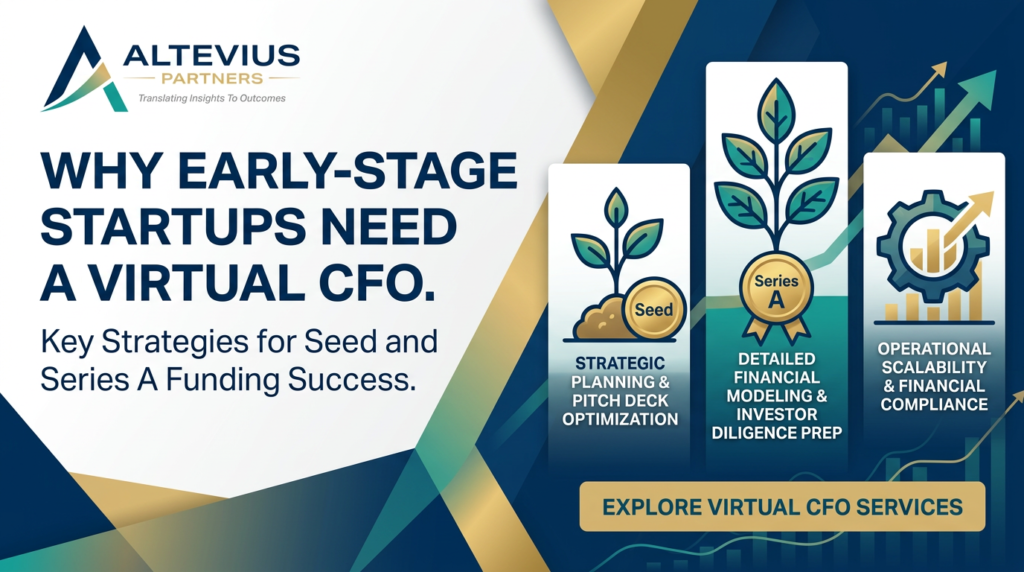


Walking into a venture capital meeting in Mumbai or Bangalore with a standard revenue spreadsheet is a quick way to stall a conversation. Over the last decade spent advising growing businesses, I have watched brilliant founders with groundbreaking products stumble during due diligence simply because their numbers lived in rigid, disconnected files. Capital allocation requires more than historical bookkeeping; it demands a forward-looking architecture that anticipates market shifts. When businesses seek specialized Financial Modelling Services, they are not just looking for tables of numbers. They are looking for a dynamic roadmap that translates operational reality into undeniable investor confidence.
Executive Summary
- Core Topic: Comprehensive overview of institutional-grade financial modelling, startup forecasting, and strategic advisory.
- Regional Focus: Jaipur, Rajasthan, and expanding national markets.
- Key Offerings: Financial Modelling Services, Financial modelling services in Jaipur, Professional financial model consultants, Startup financial model outsourcing, Custom financial forecasting for businesses, FP&A consulting services India, Investor ready financial model creation, Business valuation and financial modelling, Project finance and investment analysis, Fractional CFO and financial strategy services, Dynamic cash flow forecasting models, and specialized engagements via Altevius Partners.
- Business Value: Bridges operational data with institutional investor criteria to accelerate fundraising, safeguard liquidity, and optimize capital allocation.
Why Traditional Spreadsheets Fall Short for Growing Companies
The hidden risks of relying on basic templates for capital allocation
Many growing businesses make the mistake of downloading free online templates to map out multi-year budgets. These generic sheets often contain hardcoded formulas, circular errors, and rigid structures that break the moment your sales cycle shifts or supply chain costs fluctuate. When you rely on fragile templates, your capital allocation decisions are built on guesswork rather than robust commercial logic. Over time, this disconnect leads to unexpected cash crunches, misallocated marketing spend, and missed growth targets.
How dynamic cash flow forecasting models prevent liquidity crunches before they happen
Liquidity is the oxygen of any enterprise. A static income statement tells you what happened last quarter, but it tells you nothing about whether you can pay next month’s salaries if a major client delays an invoice by thirty days. Implementing Dynamic cash flow forecasting models changes this entirely. By building rolling assumptions around accounts receivable aging, inventory turnover, and fixed overheads, business leaders gain real-time visibility into their cash runway. I remember working with a scaling manufacturing firm in Rajasthan that avoided a severe working capital crunch simply by replacing their rigid annual budget with a dynamic 13-week cash flow projection model.
Moving past static historical accounting into forward-looking financial architecture
Accounting looks backward to report on historical performance, whereas strategic finance looks forward to engineer future outcomes. Shifting from traditional accounting to comprehensive Financial Modelling Services allows leadership teams to simulate multiple business scenarios before committing actual capital. Whether you are testing the impact of a 20% price hike or opening a new regional fulfillment center, a well-structured model quantifies the risks and rewards beforehand.
Read more: Debt vs Equity Funding: Choosing the Right Startup Capital Mix
The Core Foundations of Institutional Grade Financial Architecture
What makes an investor ready financial model creation process stand out during due diligence
Institutional investors examine spreadsheets with clinical precision. They look for three-statement integration, clear schedule roll-forwards, and transparent assumptions that can withstand rigorous stress testing. An effective Investor ready financial model creation process ensures that your income statement, balance sheet, and cash flow statement lock together seamlessly. When an investor changes a growth driver, every downstream metric should update automatically without breaking formula integrity.
Integrating operational drivers directly into your core revenue and expense forecasts
A credible model is built from the ground up using operational drivers, not top-down percentage guesses. Instead of arbitrarily stating that revenue will grow by 50% year-over-year, your model should tie revenue directly to lead generation volume, conversion rates, customer acquisition costs, and average ticket size. Similarly, operating expenses should scale logically with headcount additions, software licenses, and logistics overhead. This granular approach proves to investors that you deeply understand the mechanics of your own business.
Aligning custom financial forecasting for businesses with actual market dynamics in Rajasthan and beyond
Regional enterprises often face unique market dynamics, from localized supply chain dependencies to specific regulatory compliance requirements. Developing Custom financial forecasting for businesses ensures that your projections reflect the ground realities of your operating environment rather than generic national averages. This localized customization is precisely why businesses look for dedicated Financial modelling services in Jaipur, combining deep regional insights with international financial standards.
Empowering Startup Growth Through Dedicated Advisory Partnerships
Why startup financial model outsourcing saves internal bandwidth for product development
Early-stage founders wear multiple hats, from product development and hiring to sales and customer success. Spending late nights wrestling with complex financial formulas pulls founders away from core revenue-generating activities. Opting for Startup financial model outsourcing allows founding teams to delegate their financial architecture to seasoned professionals. This ensures institutional-grade output while keeping the internal team focused on building a great product and scaling market traction.
Essential components venture capital funds look for when reviewing early stage decks
When venture capitalists review early-stage pitch decks, they immediately flip to the financial model to evaluate unit economics, burn rate, and runway. They want to see clear proof that your customer lifetime value significantly outweighs your customer acquisition cost. Furthermore, they examine your hiring plan to see if you are scaling headcount at a sustainable pace relative to gross margin expansion. If these foundational metrics are missing or obscured, investor enthusiasm cools rapidly.
Translating complex unit economics into clear narratives that build immediate investor trust
Numbers alone rarely close funding rounds; the narrative behind the numbers does. Engaging Professional financial model consultants helps bridge the gap between complex quantitative data and a compelling business story. When you can explain your cohort retention curves, churn dynamics, and margin expansion paths with absolute clarity, you signal maturity and operational discipline to prospective investors.
Scaling Operational Oversight with Specialized FP&A Frameworks
How FP&A consulting services India businesses rely on provide continuous performance visibility
Financial planning and analysis is not a once-a-year budgeting exercise; it is an ongoing discipline of performance tracking and course correction. Utilizing specialized FP&A consulting services India companies increasingly rely on helps leadership teams establish robust management reporting dashboards. These frameworks track key performance indicators against targets, ensuring that operational managers understand the financial impact of their day-to-day decisions.
Designing variance analysis rhythms to catch margin compression early
Margin compression rarely happens overnight; it creeps in through unmonitored server costs, creeping logistics expenses, or subtle shifts in product mix. Establishing a disciplined monthly variance analysis rhythm allows you to compare actual performance against your financial model forecasts immediately. Catching a 3% dip in gross margin in month one prevents it from turning into a 15% deficit by the end of the fiscal year.
Collaborating with professional financial model consultants to stress test growth assumptions
Confirmation bias is one of the greatest dangers in strategic planning. Founders naturally want to believe their best-case growth scenario is guaranteed. Partnering with Professional financial model consultants introduces an objective, external perspective. These experts intentionally stress test your model by running worst-case scenarios, recession simulations, and cost shock tests, ensuring your business remains resilient under adverse economic conditions.
Navigating Major Capital Allocation and Strategic Transactions
Structuring project finance and investment analysis for capital intensive expansion projects
When businesses undertake heavy capital investments, such as establishing new manufacturing plants, expanding logistics networks, or launching large-scale infrastructure projects, standard budgeting tools are completely inadequate. Comprehensive Project finance and investment analysis evaluates capital structuring, debt-to-equity ratios, Net Present Value (NPV), and Internal Rate of Return (IRR) across multiple economic cycles. This rigorous evaluation ensures long-term project viability before committing substantial capital reserves.
Utilizing business valuation and financial modelling during mergers, acquisitions, or equity rounds
Whether you are acquiring a competitor, bringing in institutional equity, or preparing for an eventual exit, establishing an objective company valuation is essential. Combining Business valuation and financial modelling provides the empirical backing needed during high-stakes negotiations. Instead of arguing over subjective opinions on what a company is worth, both parties can evaluate discounted cash flow outputs and comparable transaction multiples rooted in audited financial reality.
How fractional CFO and financial strategy services give growing enterprises senior guidance on demand
Many growing enterprises have outgrown basic bookkeeping but do not yet require a full-time, C-suite Chief Financial Officer on the payroll. Engaging Fractional CFO and financial strategy services provides access to senior financial leadership on a flexible, advisory basis. This gives growing businesses elite strategic guidance on fundraising, capital restructuring, and cash flow optimization without incurring the heavy overhead of a full-time executive hire.
Partnering with Altevius Partners for Long Term Financial Clarity
The advisory philosophy of Altevius Partners in bridging operational reality with financial rigor
Choosing the right strategic finance partner is one of the most consequential decisions a leadership team can make. Altevius Partners was founded on the core belief that businesses deserve financial guidance that is practical, independent, and deeply aligned with real-world operational outcomes. Rather than delivering generic reports that sit on a shelf, their advisory engagements focus on helping founders understand what the numbers actually mean, evaluate available alternatives, and execute strategic decisions with absolute confidence.
Combining local presence in Jaipur with global standards of corporate finance
Operating out of Jaipur gives Altevius Partners a grounded understanding of regional enterprise dynamics, while their execution framework maintains the rigorous standards expected by global institutional investors. Whether a venture is scaling tech-enabled operations or expanding traditional industrial capacity, the firm delivers institutional-grade financial architecture tailored to each client’s unique growth stage.
Turning complex quantitative data into actionable insights for sustainable business success
Ultimately, the true value of exceptional financial architecture lies in clarity. By transforming complex spreadsheets into clean, intuitive dashboards and transparent investment narratives, Altevius Partners empowers founders and leadership teams to lead with conviction. Clean data builds trust, trust accelerates capital allocation, and rigorous planning turns ambitious business visions into sustainable, long-term success.
What specific business milestone or funding round are you preparing your financial model for next?
Read more: Choosing the Right Financial Advisory Firm in Jaipur for Sustainable Growth
How do professional financial models differ from standard spreadsheet templates when raising venture capital?
Free online budget templates usually rely on hardcoded variables and fragmented sheets that break down under investor scrutiny. Institutional-grade models built by experts integrate the income statement, balance sheet, and cash flow statement dynamically so that changing a single operational driver automatically updates all downstream schedules. When venture capital partners review your pitch deck, they test whether your assumptions withstand stress testing. A robust model provides clear visibility into unit economics, customer acquisition costs, and burn rate, signaling institutional maturity and operational discipline.
Why should growing enterprises in Rajasthan consider localized financial advisory partnerships?
While major financial hubs like Mumbai set national benchmarks, regional businesses face specific operational realities, such as localized supply chain logistics, regional tax nuances, and distinct capital expenditure cycles. Partnering with a specialized firm that understands both regional market dynamics and global corporate finance standards ensures your forecasts reflect true ground conditions. This combination prevents the common trap of relying on generic national averages that fail to account for regional growth constraints.
What specific operational indicators do institutional investors look for during financial due diligence?
Investors focus heavily on cash conversion cycles, gross margin sustainability, and the ratio of customer lifetime value to acquisition costs. They evaluate whether your headcount scaling aligns logically with top-line revenue expansion. Rather than accepting top-down growth guesses, institutional reviewers look for bottom-up operational drivers, such as lead generation volume, conversion efficiency, and inventory turnover, proving that leadership completely understands the mechanical levers of their enterprise.
How does dynamic cash flow forecasting protect businesses against unexpected liquidity crunches?
Static annual budgets only record historical outcomes, leaving management blind to future cash bottlenecks caused by delayed client payments or inventory spikes. Implementing rolling 13-week or 12-month dynamic cash flow projections maps out incoming cash inflows against fixed overheads and working capital requirements in real time. This proactive visibility allows leadership teams to secure short-term credit lines or adjust discretionary spending weeks before a liquidity dip occurs.
At what stage of growth should a company transition from internal bookkeeping to specialized FP&A support?
Once a business moves past initial product-market fit and begins scaling operations, managing multiple revenue streams, vendor contracts, and hiring plans becomes too complex for basic historical bookkeeping. Bringing in specialized financial planning and analysis support helps establish continuous variance analysis rhythms. Catching margin compression or unexpected cost creep early prevents minor budget variances from turning into major fiscal deficits by the end of the year.