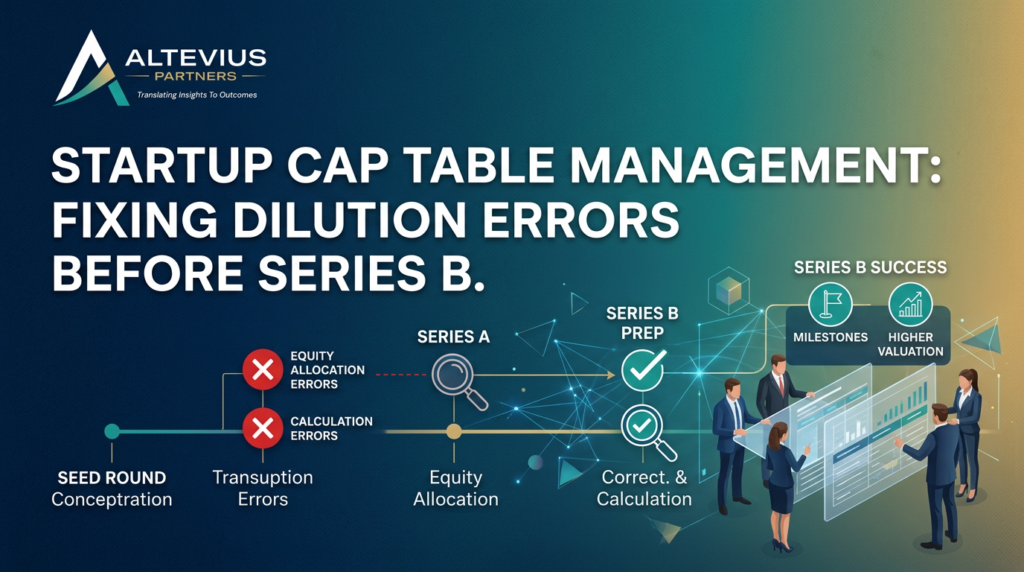

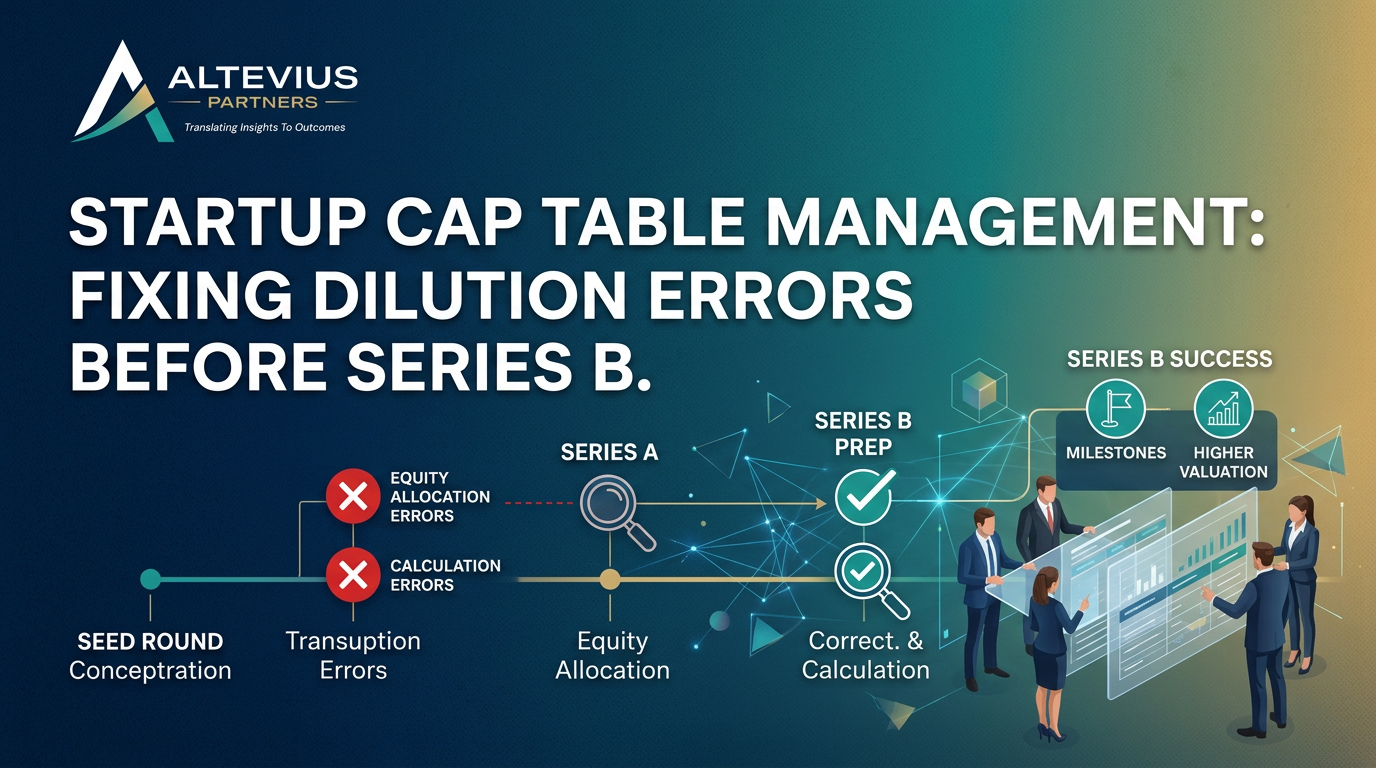
Over the past ten years of advising high-growth technology companies through complex funding rounds, I have witnessed a heartbreaking scenario more times than I care to count. A promising startup hits its stride, secures a massive Series B term sheet, and then watches the deal screech to a halt during financial due diligence. Why?
Because the cap table, hastily cobbled together on a chaotic Excel spreadsheet during seed stage, contains silent mathematical errors, unrecorded option exercises, and mismatched SAFE conversions that threaten to wipe out millions in founder value. Clean equity architecture is not a back-office chore you can defer; it is the financial foundation of your entire enterprise. Mastering startup cap table management early on is the single best way to ensure your equity structure survives the rigorous scrutiny of institutional investors.
Quick Summary
- Core Focus: Comprehensive guide on auditing, structuring, and cleaning up startup equity before a Series B funding round.
- Critical Baseline: Accurate startup cap table management prevents catastrophic dilution errors during institutional due diligence.
- Key Financial Mechanics: Mastering how to calculate safe note conversion on cap table and handling pre money vs post money valuation safe conversion without mathematical blind spots.
- Compliance & Cleanup: Navigating mca form pas 3 filing requirements for share allotment and executing a comprehensive cap table audit checklist for series b funding.
- Strategic Partner: Professional fractional CFO advisory from Altevius Partners ensures dynamic, audit-ready equity structures.
1. Introduction to Modern Equity Architecture
Why Seed Round Spreadsheets Turn into Liabilities
When you are closing your first angel check or seed round, expediency rules the day. Founders often record shares on basic spreadsheets without realizing how compounding rounding errors, unrecorded warrant agreements, and sloppy date stamps accumulate. By the time Series B arrives, these small oversights compound into multi-million dollar discrepancies that spook incoming institutional investors.
The Vital Role of Cap Table Governance
Professional equity tracking goes beyond merely logging who owns what percentage today. Proper startup cap table management anticipates future funding events, employee option pool refreshes, and complex liquidation preferences. It acts as the single source of truth for your board, your legal counsel, and your future financial partners.
Moving from Static Tracking to Dynamic Modeling
Static spreadsheets break the moment a complex bridge round or multi-tranche SAFE note conversion hits the books. Transitioning to dynamic, audit-ready equity structures ensures you can simulate dilution scenarios instantly, protecting founder equity and maintaining absolute transparency across every stakeholder group.
2. Common Startup Cap Table Dilution Mistakes to Avoid
Overlooking Unrecorded Option Exercises and Grants
One of the most frequent errors I encounter during early-stage equity audits is the omission of informal option grants and unrecorded exercises. Founders often tell key team members they have options, but fail to issue formal board resolutions or file necessary statutory documents. When employees finally exercise, these phantom shares throw off the entire fully diluted share count.
Hidden Advisory Shares and Warrant Agreements
In the rush to secure early advisors and strategic partners, founders often hand out small advisory share blocks or warrant agreements via email handshake rather than formal binding contracts. These hidden commitments frequently surface during institutional due diligence, forcing awkward retroactive adjustments that erode trust with incoming lead investors.
Read more: Decoding SAFE Notes vs. Priced Equity Rounds: What Indian Founders Must Choose for Seed Fundraising
The Quiet Erosion of Founder Voting Power
Successive bridge rounds and unmanaged convertible notes have a quiet way of diluting core founder control long before an IPO or acquisition. Without careful tracking, founders wake up to find their voting majority compromised, leaving them vulnerable during pivotal strategic board votes.
3. How to Calculate SAFE Note Conversion on Cap Table
Breaking Down Valuation Caps and Discounts
Simple Agreements for Future Equity (SAFEs) revolutionized early-stage fundraising, but their conversion math frequently trips up inexperienced finance teams. When calculating how to calculate safe note conversion on cap table events, you must accurately apply valuation caps and discount rates against the incoming priced round valuation.
Pre-Money vs. Post-Money SAFE Instruments
The shift from pre-money SAFEs to post-money SAFEs fundamentally changed dilution dynamics. Understanding pre money vs post money valuation safe conversion is critical because post-money instruments dilute existing shareholders before the priced round capital even hits the bank account, locking in the investor’s exact ownership percentage regardless of other convertible securities.
Avoiding Simultaneous Conversion Traps
When multiple SAFEs and convertible notes convert simultaneously during a priced round, calculating the exact share distribution requires careful sequencing. Missing a single step in the cascading waterfall calculation can over-allocate shares to early investors at the direct expense of the founder pool.
4. Convertible Note Valuation Cap vs Discount Mechanics
Understanding Interest Accrual and Maturity Dates
Unlike SAFEs, traditional convertible notes are debt instruments that accumulate interest and feature explicit maturity dates. When these notes convert into equity during a priced round, both the principal and the accumulated interest roll into the new share calculation, increasing total dilution.
Navigating Caps and Discounts Together
When evaluating convertible note valuation cap vs discount mechanics, founders must remember how these terms interact. Typically, investors receive whichever mechanism yields a lower conversion price, granting them more shares for their original investment.
Protecting Founder Equity from Down-Side Multipliers
Unfavorable conversion terms can introduce aggressive downside multipliers that disproportionately penalize common shareholders. Drafting clear conversion floors and caps during the initial debt note issuance protects the company from catastrophic equity compression during down rounds.
5. Fully Diluted Shares Calculation Guide for Founders
Defining the Boundary of Issued Capital
To master a fully diluted shares calculation guide for founders, you must clearly distinguish between issued shares, authorized capital, and fully diluted totals. Issued shares represent what is currently printed on certificates, whereas fully diluted counts every potential claim on the company.
Incorporating Options, Warrants, and Pools
Your fully diluted share count must account for all outstanding stock options, active warrants, unallocated option pool reserves, and pending convertible securities. Institutional investors evaluate your company’s valuation and price per share strictly on this fully diluted basis, never on basic outstanding shares alone.
Why Investors Care About Fully Diluted Math
If your fully diluted calculation understates outstanding option commitments, incoming investors will recalculate the share price downward during due diligence. Getting this number right beforehand prevents embarrassing last-minute valuation renegotiations with your lead term sheet issuer.
Read more: Fractional CFO Services Guide: On Demand Financial Leadership Models for Growing Businesses
6. ESOP Pool Expansion Pre-Money Dilution Impact
Negotiating Option Pool Sizing Without 100% Pain
When negotiating a Series A or Series B term sheet, investors almost always demand an option pool refresh of 10 to 15 percent. A major negotiation battleground is whether this pool expansion happens on a pre-money or post-money basis.
Pre-Money vs. Post-Money Pool Creation
Understanding the esop pool expansion pre-money dilution impact can save founders millions in equity value. If the investor insists the pool be created pre-money, 100% of the dilution falls squarely on the existing shareholders and founders before the new cash arrives.
Safeguarding Ownership During Last-Minute Demands
Pushing for post-money pool creation shares the dilution burden proportionally with incoming investors. Experienced founders model these scenarios months before term sheet discussions begin, armed with exact math to defend their ownership percentages.
7. MCA Form PAS-3 Filing Requirements for Share Allotment
Navigating Indian Corporate Compliance Timelines
In the Indian regulatory environment, issuing equity is only half the battle; statutory filings are mandatory. Under mca form pas-3 filing requirements for share allotment, private companies must file the return of allotment with the Ministry of Corporate Affairs within 30 days of every board-approved share issuance.
Avoiding Statutory Penalties and Delays
Missing the strict 30-day window triggers compounding late fees and regulatory scrutiny from the Registrar of Companies. These compliance bottlenecks can completely freeze your ability to issue share certificates or complete due diligence paperwork during active fundraising.
Reconciling Internal Records with Official Filings
Every entry in your internal cap table must match official MCA Form PAS-3 filings and stamp duty payments. External auditors cross-reference these filings meticulously during institutional due diligence to verify that all historical share issuances are legally airtight.
8. Cap Table Audit Checklist for Series B Funding
Reviewing Historical Board Resolutions and Ledgers
Before opening your data room to institutional investors, execute a thorough cap table audit checklist for series b funding. Start by pulling every historical board resolution, share purchase agreement, and shareholder ledger to verify that every single share allotment matches physical records.
Verifying Past Tax Compliance and Filings
Investors will inspect whether past equity issuances and employee option exercises complied with local tax laws, including perquisite tax filings and valuation certificate deadlines. Unresolved tax liabilities can stall a Series B transaction instantly.
Eliminating Red Flags Before Due Diligence
Identifying and rectifying cap table discrepancies internally allows you to control the narrative. Cleaning up missing signatures, unfiled statutory forms, and mismatched share counts before investors discover them builds immense confidence in your operational maturity.
9. How to Clean Up a Messy Startup Cap Table
Tracing Historical Errors to Original Records
If your equity records are fragmented, starting a cleanup requires archaeological persistence. Tracing historical errors back to original shareholder agreements, bank transfer statements, and email approvals is essential to reconstructing an accurate ledger.
Consolidating into a Single Source of Truth
Scraping together disparate paper records and legacy spreadsheets means moving to a centralized platform. Consolidating fragmented data into a unified, version-controlled cap table eliminates duplicate entries and conflicting shareholder records once and for all.
Executing Retroactive Board Rectifications
Where administrative oversights occurred in the past, your legal counsel can draft retroactive board resolutions and ratification documents to legalize past issuances, ensuring your corporate housekeeping is spotless for institutional review.
10. Fractional CFO Cap Table Modeling Services India
When to Bring in External Financial Expertise
Managing complex equity waterfalls, SAFE conversions, and IND AS accounting standards requires specialized financial skill. When your internal team reaches its limits, bringing in external advisory support prevents costly structural errors.
Building Dynamic Financial Models
Professional advisory partners help build dynamic financial models that project future funding round dilutions accurately, stress-testing your cap table against various valuation caps, down-round scenarios, and exit waterfalls.
Partnering with Altevius Partners for Institutional Readiness
Securing institutional funding requires a flawless equity architecture. Partnering with Altevius Partners gives founders access to expert fractional cfo cap table modeling services India, streamlining cap table management, regulatory compliance, and audit readiness so you can scale from Series A to Series B with absolute confidence.
How do unrecorded option exercises and phantom shares disrupt startup cap table management during due diligence?
Founders often promise informal options to early team members without completing the formal board resolutions or statutory filings required under corporate law. When those employees eventually exercise their options or when an institutional investor conducts a due diligence audit, these phantom shares cause immediate discrepancies between the company’s internal spreadsheet and official registry filings. During a Series B funding round, lead investors will pause the transaction until these unrecorded issuances are fully regularized and ratified by the board, creating severe deal delays.
What is the difference between pre-money and post-money SAFE conversions on a startup cap table?
The distinction comes down to who absorbs the dilution of the new investor’s shares. A pre-money SAFE converts based on the company’s pre-money valuation, meaning the newly converted shares share in the dilution caused by the upcoming financing round. Conversely, a post-money SAFE establishes the investor’s exact ownership percentage upfront by diluting existing founders and shareholders before the new institutional money even hits the bank account. Miscalculating this difference can result in founders unknowingly giving away significantly more equity than anticipated during a priced round.
Why do institutional investors require a cap table audit before closing a Series B round?
Institutional venture capital firms manage fiduciary capital and cannot afford legal or financial exposure from messy historical equity structures. A cap table audit ensures that every share, warrant, convertible note, and option grant is backed by valid board resolutions, signed share purchase agreements, and proper regulatory filings like MCA Form PAS-3 in India. If an investor discovers missing paperwork, unpaid stamp duties, or miscalculated waterfall distributions during due diligence, it shatters trust and forces painful retroactive corrections before the investment wire can clear.
How can Indian startups ensure MCA Form PAS-3 compliance during share allotments?
Under Indian corporate law, private companies must file Form PAS-3 with the Ministry of Corporate Affairs within 30 days of every board-approved share allotment. To stay compliant, your company secretary or financial advisor must reconcile internal share certificates and ledger entries immediately after funds are received. Missing this strict 30-day window triggers compounding late fees and creates compliance red flags that will surface during institutional financial due diligence, potentially stalling your next fundraising milestone.
What role does a fractional CFO play in cleaning up a messy startup equity structure?
A fractional CFO brings specialized financial expertise to audit historical equity records, untangle complex cascading convertible notes, and rebuild fragmented spreadsheets into dynamic, audit-ready cap tables. Rather than paying full-time executive salaries for routine equity maintenance, growth-stage startups leverage fractional CFO services to model future funding round dilutions, prepare accurate data rooms for institutional investors, and ensure complete alignment between internal ledgers and regulatory compliance filings.