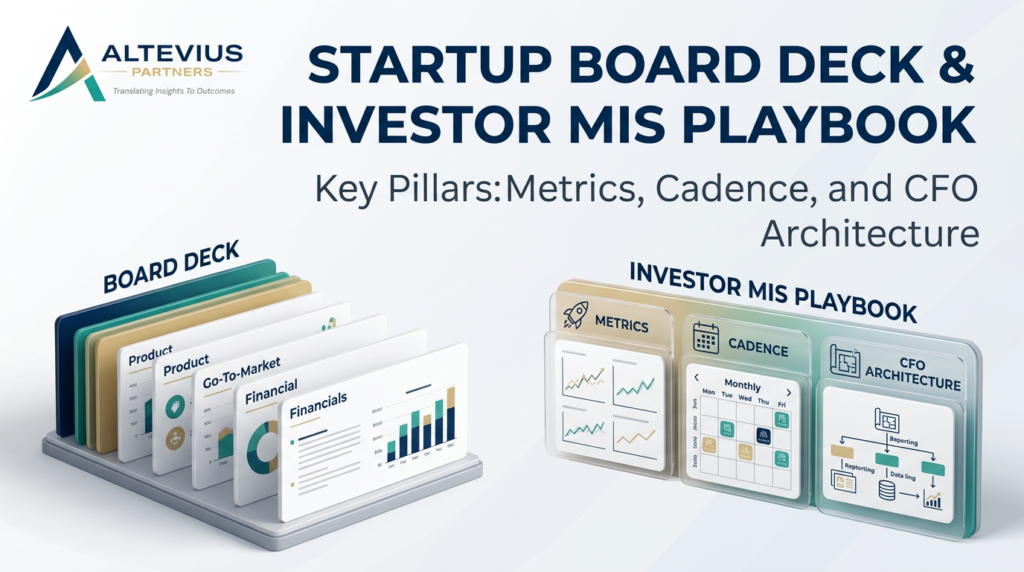

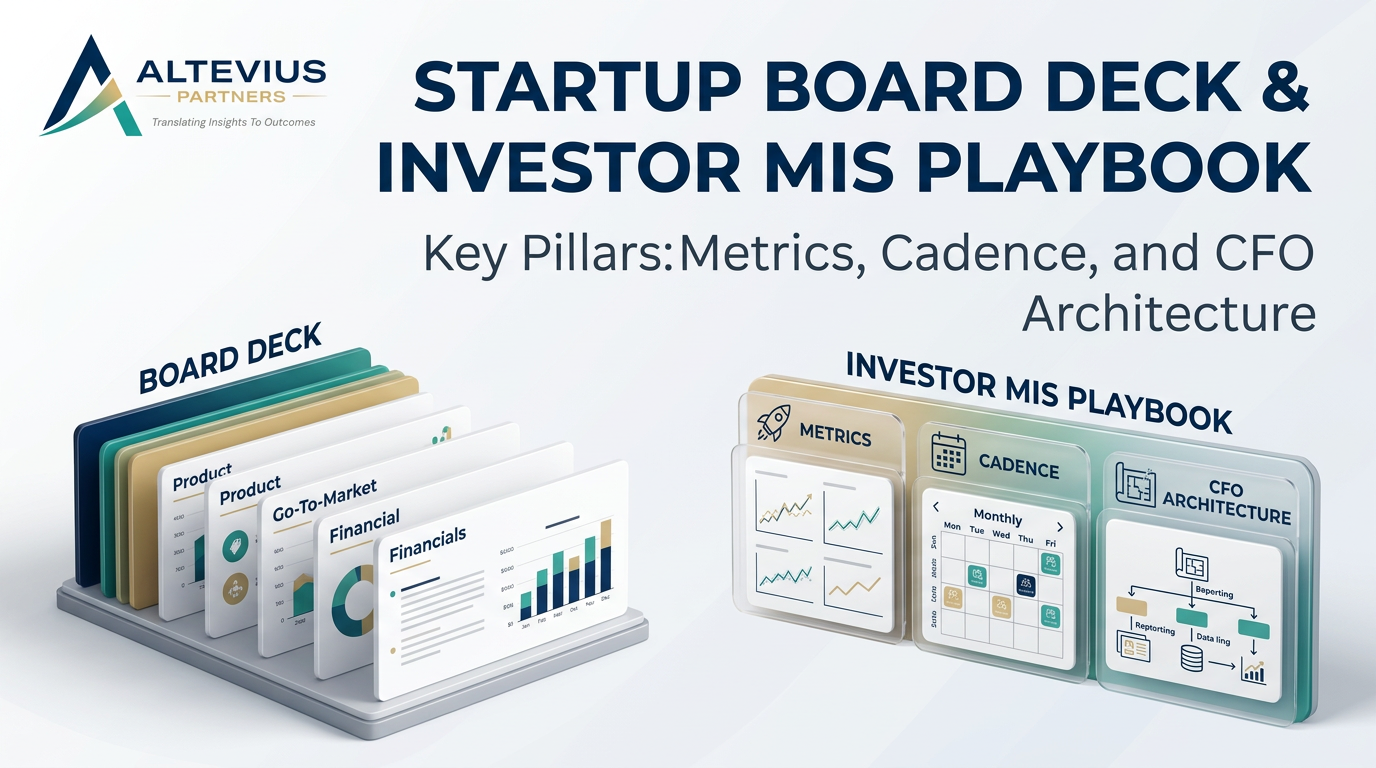
Ask ten founders what they dread most once a quarter, and at least seven will say building a startup board deck on a Sunday night with three half-finished spreadsheets open. You spend hours aligning text boxes, chasing sales numbers that sit in someone else’s inbox, and hoping nobody asks a sharp question about why cash dropped faster than planned. After ten years working alongside early and growth-stage finance teams, I have seen how a messy reporting routine quietly drains leadership energy while masking real operational signals. The promise of this playbook is simple: show you how to turn board reporting and your underlying Management Information System into a calm, honest decision engine that helps your startup scale with confidence.
- A high-performing startup board deck gives investors a clear, timely view of cash, growth, and risks before small cracks become crises, while freeing founders to focus on strategic choices rather than slide formatting.
- Most board reports lose value when they rely on backward-looking accounting numbers delivered weeks late instead of connecting live operating drivers to cash runway and near-term decisions.
- Pairing a crisp monthly investor cadence, a standardized startup MIS report format, and clear meeting discipline turns passive status updates into sharp problem-solving sessions backed by Altevius Partners.
Why a Startup Board Deck Breaks Down When Numbers Lag Reality
A strong startup board deck gives investors a clear view of cash, growth, and risks before problems turn into crises, while keeping founders focused on decisions rather than slide formatting. Too often, though, the deck gets treated like a school assignment due right before the call. Numbers arrive late, definitions shift from one quarter to the next, and half the meeting goes toward arguing over whether a customer paid in March or April.
Founders frequently hand over backward-looking spreadsheets that arrive two weeks after month end and miss what actually moved customer behavior or burn. When your financial close drags on, you are driving using a rear-view mirror that is fogged up. Say a B2B software startup sees enterprise deal cycles stretch from thirty days to seventy-five days. If accounting only posts invoices once cash clears at the end of the following month, the team might keep hiring sales reps under the assumption that pipeline is converting on schedule. By the time the board sees the bank balance dip, runway has already compressed.
At Altevius Partners, we see teams grow faster when investor reporting for startups connects daily operating facts directly to board decisions instead of treating slides as a one-off chore. Real reporting does not exist to flatter anyone. It exists to test assumptions against reality, spot bottlenecks early, and decide what changes next week.
Here is the plain-spoken takeaway for busy founders: your board does not need fifty slides of trivia, they need honest trade-offs, clean math, and early warnings while there is still room to course-correct. Bad news told early is a solvable operating problem. Bad news told late is a trust problem.
Read more: Fractional CFO vs Full-Time CFO vs Traditional Accountant: Which Does Your Business Need?
What to Include in a Startup Board Deck Without Drowning in Trivia
When founders ask what to include in a startup board deck, they usually expect a giant list of charts covering every department in the company. Resist that urge. A great board deck is a filter, not a warehouse.
A tight, dependable checklist for what to include in a startup board deck covers five essentials:
- Cash runway and burn bridge showing starting cash, inflows, outflows, ending cash, and months left at current and planned burn.
- Revenue and retention drivers explaining net new bookings, expansion, churn, and gross margin movement.
- Hiring and operating variances highlighting where actual headcount or non-headcount spend beat or missed plan.
- Product or go-to-market wins and misses tied directly to customer adoption, conversion, or delivery milestones.
- Two or three concrete asks for the room, such as warm customer introductions, senior hiring referrals, or input on pricing changes.
Vanity charts like raw signups or uncontextualized traffic hide real unit economics and slow down sharp investor feedback. I once sat in a board review where a consumer app founder proudly showed a chart of monthly app installs climbing forty percent. Great chart, terrible signal. When we looked at day-thirty retention and ad spend payback, paid installs were churning out before month two, burning cash faster with every new campaign. Vanity metrics make meetings polite and vague; unit economics make them useful.
Structure each slide so a busy angel or institutional partner grasps the point in thirty seconds without asking five basic math questions. Put a clear takeaway headline at the top of the slide that states the conclusion, not just the topic. Instead of writing “Q2 Revenue Overview,” write “Net Revenue Rose 14% QoQ as Expansion Offset Slower New Logo Wins.” People read headlines first.
Follow a strict pre-read rule: send the deck and supporting numbers forty-eight hours early so meeting time goes to judgment calls, not reading aloud. If investors see the numbers two days ahead, they bring sharper questions and better ideas into the room. If they open the deck five minutes before the call starts, you lose the first half of the hour just getting everyone oriented.
Choosing the Right Startup Board Deck Metrics by Stage
Picking the right startup board deck metrics is half about discipline and half about resisting metric bloat. Tracking forty indicators guarantees nobody knows which five actually steer the ship.
Core startup board deck metrics every team should track consistently include:
- Net cash in the bank and unrestricted cash available for operations.
- Gross burn and net burn so everyone sees both total spending and cash offset by collections.
- Runway months under conservative assumptions, not wishful thinking.
- ARR or MRR along with net new additions and contraction or churn.
- Gross margin percentage so product and delivery costs stay visible as volume grows.
- Net dollar retention to show whether existing customers expand or shrink over time.
- Customer acquisition payback period measured in months to recover acquisition spend.
A board presentation for early stage startups looks different from Series A or later: early stages lean harder on cash discipline, founder velocity, and early retention signals rather than complex multi-region splits. At pre-seed or seed, your sales motion might still be founder-led, and cohorts may be small. Obsessing over complex territory heatmaps when you have twelve paying customers wastes time. Focus on whether users stick around, why prospects say no, and how many months of runway you have to find repeatable traction.
Keep metrics tied to real cash and customer value so growth numbers never mask rising churn or stretched receivables. Paper bookings do not pay payroll if customers take ninety days to pay or ask for heavy discounts at renewal. Pair top-line growth with collections health and retention so you see quality alongside speed.
Read more: Decoding SAFE Notes vs. Priced Equity Rounds: What Indian Founders Must Choose for Seed Fundraising
Turning Raw Numbers into a Startup KPI Dashboard for Investors
A startup KPI dashboard for investors pulls data from accounting, billing, CRM, and bank feeds into one single source of truth instead of stitched-together tabs. When finance, sales, and product each maintain their own private spreadsheet with slightly different definitions of active users or recognized revenue, every meeting turns into a reconciliation exercise.
Manual copy-paste routines create silent formula errors, mismatched dates, and awkward contradictions between the board slide and the data room. One broken SUMIFS range or a forgotten filter on a date column can turn a small variance into a glaring mistake in front of your lead investor. Automating data pulls where possible and locking clear definitions keeps everyone looking at the exact same ground truth.
Simple visual habits help investors spot trends fast:
- Color-coded variances against plan that flag material beats or misses without turning the page into a rainbow.
- Clear cohort tables that show retention and expansion over time rather than hiding problems in blended averages.
- Plain notes explaining why a metric moved, naming the exact customer, pricing shift, campaign, or hiring delay behind the change.
Board Deck vs Pitch Deck Startup: Different Jobs, Different Rules
Confusing a board update with a fundraising pitch is one of the easiest traps a founder can fall into. A board deck vs pitch deck startup comparison makes the split obvious: one manages an ongoing partnership with existing stakeholders, while the other sells a future vision to newcomers.
| Dimension | Startup Board Deck | Startup Pitch Deck |
| Primary goal | Align on execution, cash runway, risks, and decisions | Spark conviction to invest capital or join the mission |
| Tone and honesty | Candid about misses, bottlenecks, and variances | Focused on upside, vision, and proof points |
| Time horizon | Recent actuals plus the next one to four quarters | Multi-year market opportunity and scaling path |
| Audience familiarity | Existing investors who already know the business | New investors seeing the story for the first time |
| Slide emphasis | Cash bridge, KPI shifts, hiring plan, and specific asks | Problem, solution, market size, traction, moat, and team |
Notice how the tone shifts. In a pitch deck, you highlight your strongest proof points and big market vision. In a board report, hiding a missed target or spinning a flat quarter only hurts you, because your board already knows the business well enough to spot gaps.
Building a Practical Startup MIS Report Format That Scales
Slides are the front window; your MIS is the engine room behind the glass. A reliable startup MIS report format covers five core parts under the hood:
- Profit and loss statement showing budget vs. actuals and prior-period comparisons.
- Cash flow statement and runway waterfall tracking cash movements and projected runway.
- Receivables and payables aging schedules to spot slow payers and upcoming vendor obligations.
- Headcount tracker detailing open roles, start dates, compensation, and department cost.
- Key operational drivers such as pipeline coverage, sales cycle length, support load, or unit volume.
At Altevius Partners, we structure MIS layouts so founders see both high-level summaries and drill-down schedules without getting lost in accounting jargon. A founder should be able to open the summary sheet, see why marketing spend ran twelve percent over budget, and click straight into the underlying vendor and campaign breakdown in seconds.
Set clear naming conventions, monthly cutoff dates, and version control rules that keep finance and leadership aligned across every reporting cycle. For example, lock accounting cutoffs on day three after month end, finish variance review by day seven, and freeze the final MIS package by day ten. When everyone knows the exact calendar, reporting stops feeling like a fire drill.
Setting a Rhythm with a Monthly Investor Update Template Startup Teams Use
Not every update needs a full board deck. A monthly investor update template startup operators rely on stays short, consistent, and easy to skim in five minutes. Think of it as a steady pulse check between formal meetings.
A practical monthly investor update template startup teams can reuse every month includes five tight sections:
- Headline summary capturing the month in three or four plain sentences.
- Cash and key KPIs listing cash balance, burn, runway, and core growth or retention figures.
- Wins and setbacks naming real customer wins, product launches, and honest misses.
- Hiring and product notes sharing key hires, open critical roles, and shipping milestones.
- Specific help needed from investors outlining two clear ways they can pitch in this month.
Sending brief monthly notes builds quiet trust between board meetings and turns investors into helpful problem-solvers when a tough customer or hiring issue pops up. In my experience, investors who get crisp, honest monthly notes respond much faster when you need a quick intro or an emergency sounding board.
Establishing a Predictable Startup Financial Reporting Cadence
A disciplined startup financial reporting cadence separates weekly operating checks, monthly MIS close and investor notes, and quarterly deep dives. Mixing all three into one giant marathon wastes everyone’s time.
Here is how those layers fit together in practice:
- Weekly operating check-ins track cash movements, sales activity, collections, and immediate execution blockers.
- Monthly MIS close and investor updates lock actuals against budget, refresh cash and runway, and share a concise progress note.
- Quarterly board sessions step back to review strategy, hiring plans, product bets, and major risks over the next few quarters.
Waiting until a fundraise or audit to clean up numbers forces rushed firefighting instead of calm planning. When your monthly close and MIS habits are already running smoothly, preparing for diligence or a new round takes days instead of months.
Tying monthly actuals to a rolling forecast helps founders adjust spend early when collections slow down or sales cycles stretch. Instead of clinging to a static annual budget written in December when reality looks totally different by June, a rolling forecast updates future months based on what your business is actually doing today.
Read more: Startup Cap Table Management: Fixing Dilution Errors Before Series B
How to Run a Startup Board Meeting That Leads to Real Action
Even clean numbers and sharp slides cannot rescue a poorly chaired meeting. Knowing how to run a startup board meeting comes down to time management and decision focus.
Lock the agenda around decisions, keep updates brief, spend most of the time on top risks and strategic choices, and end with named owners and deadlines. A simple rule of thumb: spend no more than twenty percent of the meeting reviewing historical slides, and save at least sixty percent for open questions, trade-offs, and future moves.
Watch out for common traps that waste board time:
- Spending forty minutes reciting historical slides that everyone already read in the pre-read.
- Springing surprises without pre-reads, such as dropping a sudden cash crunch or major executive departure cold at the start of the call.
- Leaving meetings with vague advice instead of clear next steps, like “let’s revisit pricing soon” with no owner or date.
Build a simple follow-up habit: send concise action items and decision notes within twenty-four hours so momentum carries straight into daily execution. A five-bullet recap listing each decision, who owns the follow-up, and the target date keeps everyone accountable without heavy bureaucracy.
CFO Architecture: When to Bring in Senior Finance Leadership
As a startup grows more complex, the founder cannot wear every hat forever. A fractional or strategic CFO designs the reporting spine, connects accounting to forecasting, and coaches founders on talking through tough numbers with the board. Rather than patching together ad-hoc spreadsheets before each investor call, senior finance leadership builds a repeatable system that scales with your team.
Clear signs your current setup is holding you back include:
- Month-end close drags past mid-month, leaving leadership flying blind for weeks.
- Board prep eats up whole weekends every quarter and pulls key builders away from customers.
- Nobody trusts the cash forecast because actuals, hiring plans, and collections live in disconnected files.
At Altevius Partners, we help startups put clean investor reporting for startups and practical MIS habits in place so founders can lead with clarity at every stage. When your numbers are timely, clear, and tied to real decisions, board meetings shift from stressful status recaps to genuine strategic partnership.
Ready to stop wrestling with late spreadsheets and build a reporting rhythm your board can count on? Reach out to Altevius Partners to design a practical MIS format, reporting cadence, and board pack tailored to your stage and growth goals.
What should be on the first few slides of a startup board deck?
Start with cash, runway, and a blunt headline summary of where the business actually stands right now. Investors care first about whether the company is safe and whether core assumptions are holding up, not whether you built a clever animation on slide two.
In practice, putting cash balance, monthly burn, runway months, and your top two or three decisions near the top sets the right tone. If runway is fourteen months and net new sales slowed down by twenty percent, say that right away. Leading with clarity saves everyone from guessing what you are trying to hide.
How often should a startup send investor updates if board meetings are quarterly?
Send a short monthly investor update every month, even in months when there is no formal board meeting. A tight five-minute note keeps existing backers informed while letting you ask for concrete help before small problems snowball.
Keep the monthly rhythm light and predictable. Share cash and key KPIs, note real wins and misses, flag critical hiring or product moves, and ask for one or two specific introductions or favors. Founders who send steady monthly updates usually get much faster answers when a real crunch hits.
Why is a startup MIS report better than a simple accounting profit and loss statement?
A standard profit and loss statement shows accounting entries under accrual or tax rules, while a startup MIS report connects those numbers to cash timing, operational drivers, and plan variances. Accounting tells you what was booked or billed; a good MIS tells you what is actually happening in the business.
For instance, revenue can look healthy on paper while receivables stretch to eighty days and cash quietly dries up. A practical MIS pairs budget-versus-actual variances with cash runway, aging receivables, headcount cost, and operating metrics so founders can act before liquidity gets tight.
How long should a startup board meeting last, and how should the time be split?
Keep a routine startup board meeting to sixty or ninety minutes, and spend most of that time on decisions, risks, and future trade-offs rather than reading slides out loud. If everyone reads the pre-read forty-eight hours early, you do not need to recite historical charts line by line.
A healthy split gives roughly twenty percent of the time to quick context and cash or KPI highlights, and up to eighty percent to real choices like pricing changes, hiring plans, or go-to-market bottlenecks. End with clear owners and dates so the meeting produces action instead of vague advice.
When should a startup bring in a fractional CFO to fix board reporting and MIS?
Bring in a fractional CFO when monthly reporting takes too long, board prep eats up entire weekends, or leadership cannot trust its own cash and runway numbers. Waiting until a fundraise, audit, or cash squeeze forces a scramble usually means you are already reacting late.
At Altevius Partners, we often step in right as a seed or Series A startup outgrows founder-managed spreadsheets. Putting a clean MIS format, a monthly close calendar, and a repeatable board deck rhythm in place gives founders calm visibility without hiring a full-time executive before the business needs one.