

A growing enterprise doesn’t always face monetary trouble when sales slow down. In fact, the real hurdle often surfaces right when sales pick up speed. Higher sales volume naturally demands more inventory, increased operating expenses, extra manpower, and tighter pressure on working capital. For ventures rooted in India’s Tier 2 and Tier 3 regions, handling this expansion while safeguarding profitability becomes nearly impossible without robust financial planning. This is where Outsourced CFO Services step in, giving businesses direct access to senior financial insight without the heavy financial burden of employing a full-time executive. With expert guidance, owners can make sharp, data-driven decisions concerning cash flow, funding, margins, and scaling operations.
Key Takeaways
- Outsourced CFO support helps growing firms link daily accounting reports directly with big-picture operational plans.
- Cash flow forecasting pinpoints funding deficits before they can halt daily business functions.
- Virtual and fractional CFO arrangements offer flexible financial leadership tailored precisely to evolving corporate budgets.
- Financial planning empowers SMEs to assess expansion risks, track working capital, and avoid liquidity traps.
- Businesses must pick advisory partners based on verified industry expertise, transparent deliverables, and actual operational requirements.
Why Growing Businesses Need Outsourced CFO Services
Enterprises across Tier 2 and Tier 3 hubs span diverse sectors like manufacturing, retail, healthcare, logistics, and technology. Typically, these firms launch with a single founder who juggles sales, ground operations, customer relations, and accounts single-handedly. As the company scales, this hands-on model breaks down.
Although founders typically monitor monthly top-line earnings without difficulty, they frequently overlook vital metrics: identifying which buyers drive superior profit margins, predicting exact cash flow shortfalls months in advance, or calculating if a new branch can fund its own overhead expenses. These strategic dilemmas demand specialized financial management expertise that goes far beyond routine accounting.
Read more: Top Venture Capital Firms Investing in India (2026 Guide)
Common Financial Hurdles During Growth
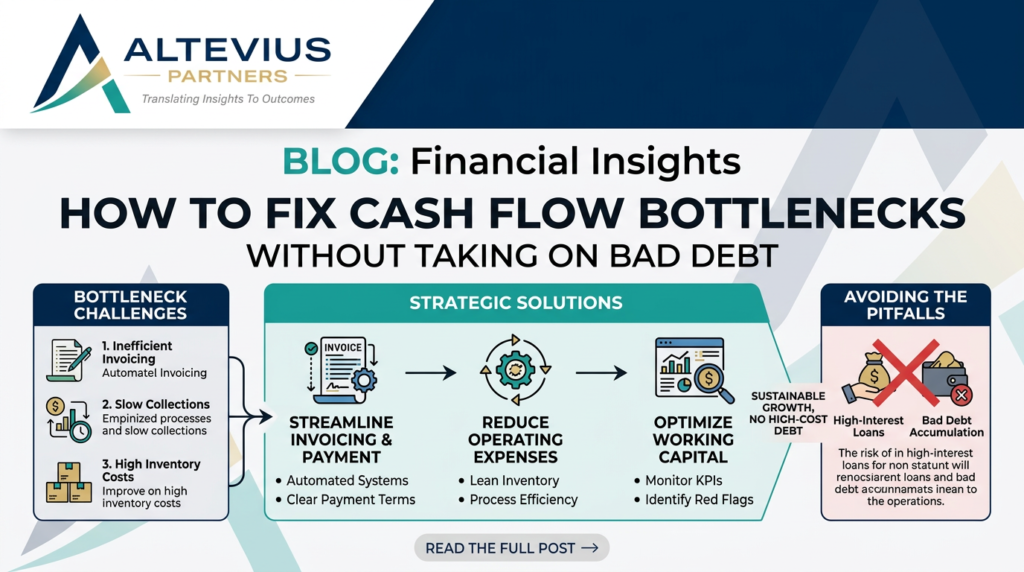
- Slow Receivables: Delivering inventory on trade credit records expected earnings instantly, yet if buyers delay settling bills, the company must still disburse staff salaries, facility rents, utility fees, and supplier invoices right on schedule.
- Surging Operating Costs: Scaling up sales often invites hidden spikes in logistics, staffing, and inventory maintenance. Without regular profitability analysis, margins quietly shrink even as top-line revenue jumps.
- Limited Financial Forecasting: Relying purely on historical ledgers leaves management blind to future cash needs. Dynamic forecasts help leadership stay ready for seasonal shifts.
- Funding Expansion: Setting up a new unit or upgrading machinery requires capital upfront. Owners must accurately calculate investments, payback periods, and liquidity buffers before committing funds.
Consider a regional distributor bagging a massive purchase order from a national retail chain. While it looks like a jackpot, the distributor must buy bulk raw materials immediately while waiting sixty days to collect payment. If suppliers demand settlement within thirty days, a severe cash shortage hits despite the deal being profitable on paper. A smart financial forecast exposes this gap beforehand, letting management negotiate better payment terms or secure short-term credit lines.
What Are Outsourced CFO Services?
Outsourced CFO support grants firms high-level financial strategy, deep data analysis, and decision-making support via an external advisory partner. Engagement models vary: some opt for monthly performance reviews, while others hire teams for targeted fundraising or budgeting projects.
Key Responsibilities Covered
- Financial Planning: Building annual budgets that align commercial targets with capital availability.
- Cash Flow Management: Tracking incoming receipts versus outgoing payments to catch shortfalls early.
- Profitability Analysis: Evaluating unit-level margins, product lines, and cost drivers.
- Management Reporting: Translating dry financial statements into actionable executive insights.
- Working Capital Planning: Optimizing inventory holding periods and debtor-creditor cycles.
- Funding Preparation: Drafting investor pitches and robust financial models for bank loans.
Read more: Top Business Valuation Firms in India: Leading Advisory Services
How Virtual CFO Services Help Small Businesses Scale
Virtual CFO services deliver high-level financial command remotely through digital dashboards, virtual meetings, and structured performance reviews. This model suits businesses that have outgrown standard bookkeeping but do not yet require a full-time executive on the payroll.
Small Business Financial Management
Effective Small business financial management relies on tracking cash velocity knowing precisely where money enters, where it drains, and what capital is required to hit the next milestone. A virtual CFO sets up structured reporting covering gross margins, debt levels, and operating overheads.
Instead of panic-cutting costs when inventory stacks up, management can evaluate whether the stock build-up matches actual pre-booked orders or if credit collection terms need tightening.
Cash Flow Management for Small Businesses
Cash flow management for small businesses must prioritize the exact timing of cash inflows over paper profits. A solid workflow includes:
- Maintaining a rolling cash flow forecast updated weekly.
- Flagging overdue client invoices instantly.
- Mapping out tax dates, payroll, and upcoming capital expenses.
- Setting clear operating reserve buffers.
If a manufacturer expects ₹25 Lakh in customer receipts next month alongside ₹20 Lakh in vendor payouts and ₹4 Lakh in salary rollouts, a single delayed client payment can trigger a panic. A rolling forecast exposes this timing mismatch early, allowing owners to accelerate collections or tap short-term credit lines smoothly.
Fractional CFO Services for Growing SMEs
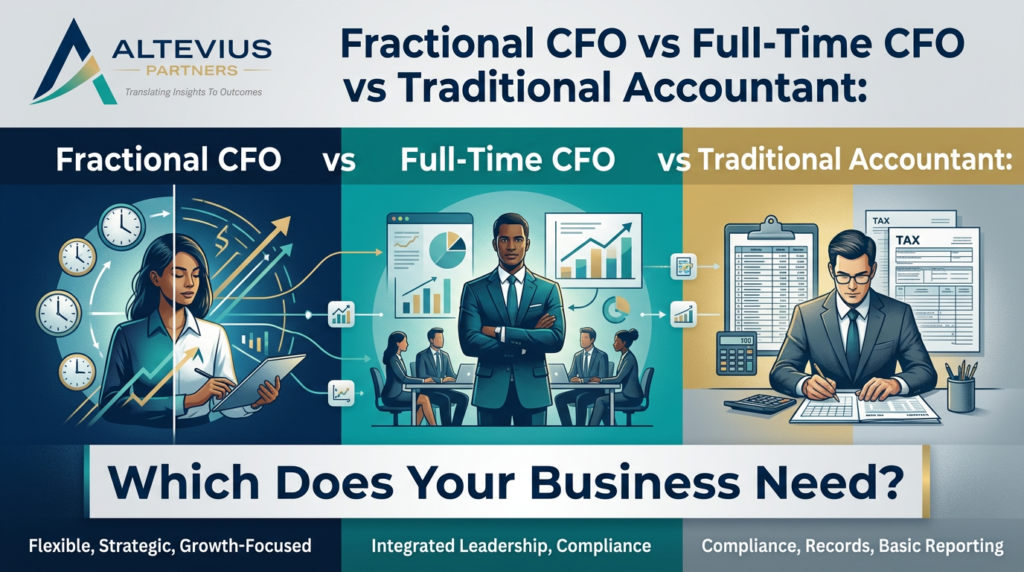
Fractional CFO services provide elite financial expertise on a fractional or part-time retainer basis. This is ideal when a company needs senior leadership for strategic decisions without taking on a full-time executive’s salary overhead.
When to Hire a Fractional CFO
- Monthly management reports fail to explain underlying business performance.
- Forecasting cash requirements accurately becomes a recurring struggle.
- The firm is gearing up to pitch lenders or venture investors.
- Internal processes lack a disciplined budgeting framework.
Financial Planning for SMEs in Tier 2 and Tier 3 Cities
Regional enterprises expanding beyond their home turf must anchor their ambitions in realistic cost and risk assessments. Opening a secondary facility requires meticulous mapping of local rent, staffing, marketing, and working capital cycles.
Read more: Business Finance Jaipur: FP&A Services for Growth
Budgeting, Controls, and Funding Readiness
- Rigorous Budgeting: Compare actual monthly expenses against projections and investigate major variances immediately.
- Financial Controls: Implement strict spending limits, dual-authorization payment approvals, and regular bank reconciliations to minimize operational leakages.
- Investment Readiness: Clean financial models help enterprises navigate lender discussions with confidence, though advisory support naturally enhances presentation quality rather than guaranteeing loan approvals.
How Altevius Partners Supports Business Financial Planning
Based in Jaipur, Rajasthan, Altevius Partners offers specialized financial advisory services designed to empower growing enterprises. Their core capabilities include financial modelling, financial planning and analysis (FP&A), fundraising advisory, business valuation, and project finance consulting.
For businesses navigating expansion hurdles, expert guidance in financial modelling ensures that capital allocations, cost structures, and cash projections are thoroughly stress-tested before committing funds. Whether a firm needs structured project finance analysis or investor-ready pitch decks, aligning with professional advisory services helps bridge the gap between regional growth and long-term financial stability.
Building a Financial Roadmap for Sustainable Growth
- First 30 Days (Assessment): Audit current bank balances, receivables, debt liabilities, and operational reporting controls to establish a clear baseline.
- Days 31 to 90 (Visibility): Deploy rolling cash flow forecasts, set up monthly management review dashboards, and track core margin metrics.
- Months 4 to 12 (Expansion): Use refined data models to evaluate new branch investments, calculate working capital requirements, and tighten internal controls.
Conclusion
Scaling a enterprise unlocks massive potential but places immense stress on cash reserves and working management systems. Integrating Outsourced CFO Services allows regional firms to access elite financial intelligence through flexible virtual or fractional models. By taking a proactive approach to financial planning, business owners across Tier 2 and Tier 3 cities can secure their operational runway, optimize working capital, and build lasting profitability.
Read more: Fractional CFO Services Guide: On-Demand Financial Leadership
When should a growing business in a Tier 2 or Tier 3 city transition from a local accountant to an outsourced CFO?
The shift usually becomes necessary when your business records steady revenue growth, but your cash availability does not match your profit statements. If you find yourself consistently injecting personal funds to cover monthly salaries or vendor bills despite booking strong sales, your accounting system is no longer enough. An accountant records historical transactions; an outsourced CFO builds predictive models, evaluates unit-level margins, and manages your working capital so you can safely fund expansion without choking liquidity.
How do virtual CFO services differ structurally from hiring a full-time chief financial officer?
A full-time CFO sits in-house daily, driving internal team management and routine operational workflows, which often demands a heavy salary and overhead commitment unsuited for mid-sized regional enterprises. Virtual CFO services operate on a fractional or advisory retainer model. They plug into your business remotely through scheduled monthly reviews, digital management dashboards, and targeted financial modelling projects, giving you elite strategic leadership exactly when you need it at a fraction of the cost.
What specific metrics should a regional manufacturer track to prevent cash flow crunches during rapid scaling?
Beyond tracking monthly gross revenue, manufacturers must monitor their cash conversion cycle, which measures the exact duration cash remains tied up in inventory and raw material stocks before collection from clients. Key operational metrics include the days sales outstanding (DSO), average inventory holding periods, and vendor payment windows. If your DSO stretches past your supplier credit terms, higher sales volume will accelerate cash depletion rather than build wealth.
Can an outsourced financial advisory firm actually help secure bank loans or institutional funding for SMEs?
While an advisory partner cannot guarantee loan approval from banks or non-banking financial companies (NBFCs), they dramatically improve your application’s credibility. Firms like Altevius Partners structure robust financial models, project finance reports, and investor decks that clearly demonstrate repayment capacity, debt service coverage ratios, and down-side risk mitigations. Lenders prefer reviewing professionally structured forecasts over basic tax filings because it proves management understands their capital requirements.
What should business owners evaluate when comparing different fractional CFO providers in India?
Look past generic fee quotes and marketing brochures. Evaluate whether the provider has hands-on sector experience matching your operational reality such as complex inventory cycles for distribution businesses or unit-cost modelling for manufacturing units. Demand absolute clarity on deliverables, such as whether they build rolling cash flow forecasts, host monthly review sessions with your core team, or take ownership of bank negotiations. Your advisory partner should act as a strategic sounding board, not just another vendor.