

A business can win three major customers in a single quarter and still end up with less money available than it had before. The new contracts look attractive, but they require more inventory, additional staff, longer payment terms, and higher delivery costs. By the time customers pay, the company may already be struggling to meet its own commitments. The problem is not necessarily poor sales.
It may be that management has not calculated the financial cost of growth. FP&A, or financial planning and analysis, helps business owners connect commercial decisions with their actual financial consequences. Instead of asking only how much the business can sell, management can examine which sales are worth pursuing, how much cash they require, and whether the expected returns justify the effort.
What Growing SMEs Need to Know About FP&A
For a growing business, financial planning should answer five practical questions:
- Which products, customers, and services contribute the most profit?
- How much cash will the company need to support its next stage of growth?
- Which costs are increasing faster than the business can comfortably afford?
- What happens if an important customer pays late or sales fall below expectations?
- Which decisions should management make now to protect future profitability?
These questions form the foundation of Financial planning and analysis. The objective is not to produce more reports. It is to use financial information to make better decisions about pricing, staffing, purchasing, investment, and expansion.
1. FP&A Should Start With the Decisions That Could Cost Your Business Money
Many SMEs prepare financial reports because their accountant needs them, their lender requests them, or management wants to review monthly performance. Those reports are necessary, but they do not always answer the questions that determine whether a business will grow profitably.
Consider a hypothetical packaging manufacturer in India. Its sales have increased significantly, but its bank balance has barely changed. Management assumes that the company needs more orders to improve its financial position.
Before pursuing additional customers, the business investigates three issues.
First, several large customers negotiate extended payment terms. Second, production costs rise because urgent orders require overtime. Third, the company purchases more raw materials than it can use immediately.
The company is generating more revenue, but it is also committing cash earlier, collecting money later, and earning less on certain orders.
A useful FP&A process would examine these problems before recommending further expansion.
How FP&A changes the questions management asks
Instead of asking whether sales are increasing, management examines the margin earned on each type of order.
Instead of approving additional recruitment because the sales pipeline looks promising, it estimates how much additional revenue the employees must generate to cover their full cost.
Instead of assuming that a profitable order is automatically attractive, it estimates the cash required to complete the order and the time needed to recover that cash.
This approach makes financial planning part of everyday management rather than an exercise performed after the accounts are closed.
Read more: Fractional CFO Services Guide: On Demand Financial Leadership Models for Growing Businesses
FP&A and accounting have different responsibilities
Accounting establishes what happened in the company’s financial records. FP&A investigates what those results mean for the business and how they may influence future decisions.
For example, the accounts may show that electricity costs increased by ₹80,000 during the month. An FP&A review would determine whether the increase resulted from higher production, inefficient equipment, revised tariffs, or unusual operating conditions.
The recommended action depends on the cause. Reducing production may be inappropriate if demand is strong and the additional costs are justified by profitable orders. Equipment maintenance or revised production scheduling may be more effective.
The value comes from understanding the financial driver before deciding what to change.
2. Financial Management for Small Businesses Must Connect Revenue With Profit
Revenue is only the starting point of financial performance. The business must also consider direct costs, operating expenses, financing costs, and the cash needed to deliver its products or services.
A company can increase sales while making each sale less attractive financially. This often happens when discounts become routine, suppliers increase prices, delivery costs rise, or management accepts work that requires disproportionate effort.
Examine the economics of individual products and customers
Imagine a hypothetical business selling commercial furniture to two types of customers.
Its large institutional customers generate substantial orders but demand discounts, custom specifications, and frequent deliveries. Smaller commercial customers place fewer orders but accept standard products and pay more promptly.
A revenue report may suggest that institutional customers deserve most of the company’s attention. A more detailed profitability review could reveal a different picture.
Management should calculate the revenue earned from each customer group, subtract the costs directly associated with fulfilling those orders, and investigate additional service and delivery expenses. Where reliable information is available, it should also consider the operational resources consumed by each group.
The result may show that some large accounts generate less contribution than expected.
That does not automatically mean the business should stop serving those customers. Their orders may support factory utilization, create repeat business, or provide other commercial benefits. However, management now has a reason to review pricing, minimum order quantities, delivery charges, or contract terms.
Read more: Part Time CFO Cost in India: Analyzing Fractional Financial Leadership Fees
Choose financial indicators that explain business performance
An SME should select financial measures according to its operating model.
| Indicator | Decision it can support |
|---|---|
| Gross profit margin | Whether selling prices adequately cover direct costs |
| Operating profit margin | Whether the operating model remains financially sustainable |
| Customer collection period | Whether credit terms are creating pressure on cash |
| Inventory turnover | Whether purchasing is tying up excessive working capital |
| Operating cash flow | Whether ordinary business activities generate cash |
| Customer level contribution | Which customer relationships deserve closer commercial review |
These measures become more useful when management compares them across periods and investigates significant changes.
A falling margin, for instance, should lead to questions about pricing, product mix, supplier costs, and operational efficiency. The ratio identifies where to investigate, but the underlying business evidence determines the right response.
3. Financial Forecasting for Small Businesses Should Reflect How the Company Actually Operates
A forecast becomes unreliable when management simply increases last year’s revenue by an arbitrary percentage and assumes that expenses will follow the same pattern.
A better method starts with the factors that produce sales and costs.
For a service company, revenue may depend on the number of active clients, average project fees, employee availability, and project completion dates. For a distributor, it may depend on sales volume, product prices, supplier availability, and customer demand.
The forecast should reflect these drivers rather than relying on a single growth assumption.
Build a forecast that can be challenged
Suppose a consulting firm expects to win six new projects next quarter. Its forecast should not automatically assume that all six projects will begin on the same date or generate equal revenue.
Management should estimate the probability of each opportunity converting, when work is likely to begin, what resources delivery will require, and when the client is expected to pay.
The assumptions should remain visible. If two projects are delayed, the finance team can update the forecast and calculate the effect on revenue, staffing requirements, and cash availability.
This makes the forecast useful even when the original expectation proves incorrect.
Read more: Why Early-Stage Startups Need a Virtual CFO for Seed and Series A Funding
Forecast expenses according to their cost drivers
Some costs remain relatively stable as sales change. Others increase with production, customer activity, or staffing.
A forecast should distinguish between these patterns. It should also account for planned investments and one time expenses that could materially affect the business.
For example, a manufacturer planning to add a second shift needs to estimate more than the additional wages. It should consider supervision, maintenance, utilities, material consumption, and the additional sales required to justify the change.
Management can then evaluate whether the proposed capacity will generate sufficient contribution to cover the added cost.
Use scenarios to identify financial pressure points
Rather than relying on a single expected outcome, prepare alternative forecasts for material uncertainties.
A base case reflects the most reasonable current expectation. An upside case examines stronger demand or better margins. A downside case considers developments such as delayed orders, higher input costs, or slower customer payments.
The most useful result is not a collection of hypothetical numbers. It is a decision rule.
For example, management might decide to postpone recruitment if confirmed orders fall below a defined level, or reduce discretionary expenditure if projected cash drops below the minimum operating reserve.
The thresholds should reflect the company’s actual commitments and risk tolerance.
4. Budgeting and Forecasting for SMEs Should Help Managers Correct Problems Early
A budget describes the financial plan management has approved. A forecast describes the results management currently expects.
The difference matters when conditions change.
Suppose an SME approves an annual marketing budget of ₹24 lakh. After four months, the business discovers that one advertising channel is generating expensive leads with few conversions.
Management should not continue spending simply because the budget has already been approved. It should review the campaign, assess the expected return, and consider moving resources to a more effective channel.
The budget remains a reference for evaluating the original plan. The forecast should reflect the revised expectations.
Review financial variances with their business causes
A useful monthly review identifies significant differences between planned and actual performance.
If raw material costs exceed the budget, management should determine whether the cause was higher purchase prices, additional production, waste, or a change in product mix.
Each cause suggests a different response. Supplier negotiations may help with purchase prices. Production controls may address waste. A pricing review may be needed if the economics of a product have changed.
A variance report should therefore include the financial difference, the explanation, the expected future effect, and the action required.
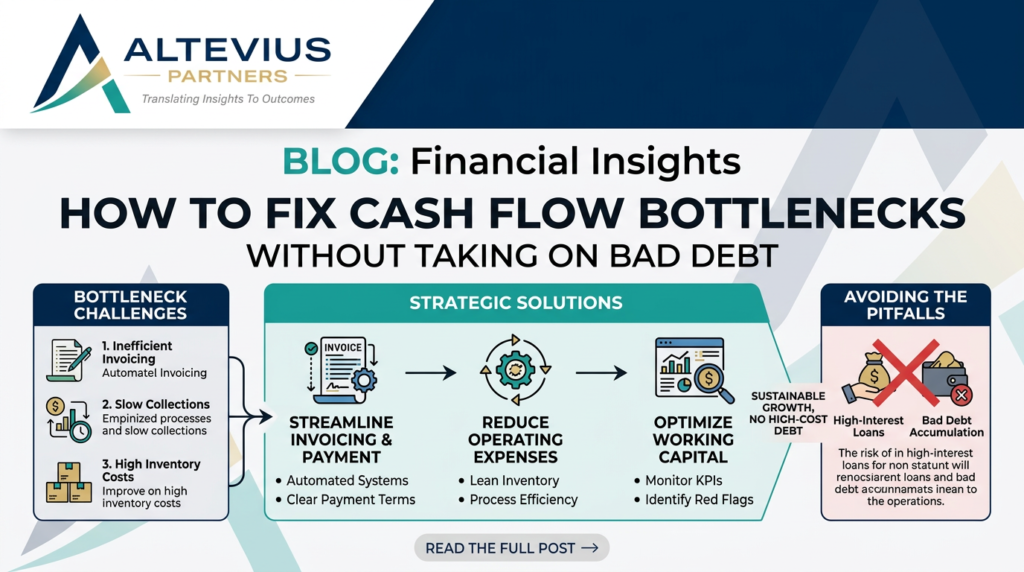
Read more: How to Fix Cash Flow Bottlenecks Without Taking on Bad Debt
Know when to update the forecast
An SME with predictable sales may review its forecast monthly. A company facing irregular customer payments or rapidly changing demand may need a more frequent cash review.
The frequency should be determined by how quickly financial conditions can change and how much time management needs to respond.
Updating forecasts too frequently without new information creates unnecessary work. Waiting too long when the business is under pressure can leave management with fewer options.
5. Cash Flow Forecasting for Small Businesses Can Prevent Costly Surprises
Cash flow is one of the most important parts of SME financial planning because the timing of receipts and payments can determine whether a company can meet its commitments.
Consider a hypothetical engineering supplier that receives an order worth ₹15 lakh. The customer agrees to pay 60 days after delivery. The supplier must spend ₹9 lakh on materials and production before shipping the goods.
The order may generate an attractive profit, but the company must finance the production period and wait for payment. If several similar orders arrive together, the total cash requirement could become substantial.
Calculate the cash required before accepting major orders
Management should estimate the cash needed for materials, wages, transport, and other fulfilment costs. It should then map those payments against expected customer receipts.
A simple forecast begins with opening cash, adds expected receipts, and subtracts expected payments.
For example:
| Cash forecast item | Illustrative amount |
|---|---|
| Opening cash | ₹12 lakh |
| Expected customer receipts | ₹18 lakh |
| Supplier and operating payments | ₹20 lakh |
| Planned equipment payment | ₹4 lakh |
| Expected closing cash | ₹6 lakh |
Although the forecast shows a positive closing balance, management should check upcoming payment dates and its minimum operating cash requirement before concluding that the position is safe.
The figures above are illustrative. Each company should use its own payment schedules and commitments.
Read more: Scaling Tier 2 and Tier 3 Businesses: The Rise of Outsourced CFO Services
Improve working capital without damaging operations
Several practical steps can help an SME manage cash more effectively.
- Follow up on overdue customer invoices and investigate disputed amounts promptly.
- Review whether customer credit terms reflect the risk and cost of serving each account.
- Negotiate supplier terms that better match the company’s collection cycle where commercially possible.
- Reduce unnecessary inventory while maintaining enough stock to meet realistic demand.
- Evaluate the cash impact of large orders before accepting them.
These decisions should be coordinated with sales and operations. Aggressively reducing stock may damage customer service, while tightening credit terms without considering commercial relationships could reduce sales.
The aim is to improve the timing and use of cash without creating larger operating problems.
6. Financial Statement Analysis and Financial Reporting and Analysis Should Explain What Changed
Financial statements become more useful when management connects them with operational events.
An income statement shows revenue and expenses over a period. A balance sheet shows the company’s assets, liabilities, and equity at a particular date. A cash flow statement explains cash movements from operating, investing, and financing activities.
Each statement answers a different question.
Investigate changes in profitability
If revenue increases but operating profit declines, management should examine direct costs, employee expenses, overhead, and the mix of products or services sold.
Suppose revenue increases by 10% while operating expenses increase by 18%. That difference may indicate that costs are growing faster than the business can support.
However, the increase may be justified if the company has recruited employees for a confirmed expansion. Management needs to establish whether the additional spending is producing the expected commercial benefit and when that benefit should appear.
Examine liquidity and financial commitments
A balance sheet review should consider the amount of cash available, the age of customer receivables, inventory levels, outstanding supplier payments, and debt obligations.
A company with substantial receivables may appear financially strong but still face difficulty meeting immediate commitments. The amount recorded as an asset does not guarantee that the money will arrive when needed.
Financial ratios can help identify areas requiring attention, but they should be interpreted alongside the company’s operating cycle and the quality of its assets.
Prepare a useful Financial statement analysis report
A management report should explain the financial position in terms that support a decision.
It should include the most important changes in revenue and profit, the condition of working capital, expected cash requirements, significant variances, and recommendations for management.
Every major finding should answer three questions: what changed, why it matters, and what action is appropriate.
The report should also distinguish actual results from estimates and assumptions. If the available information is incomplete, that limitation should be stated rather than hidden behind a confident conclusion.
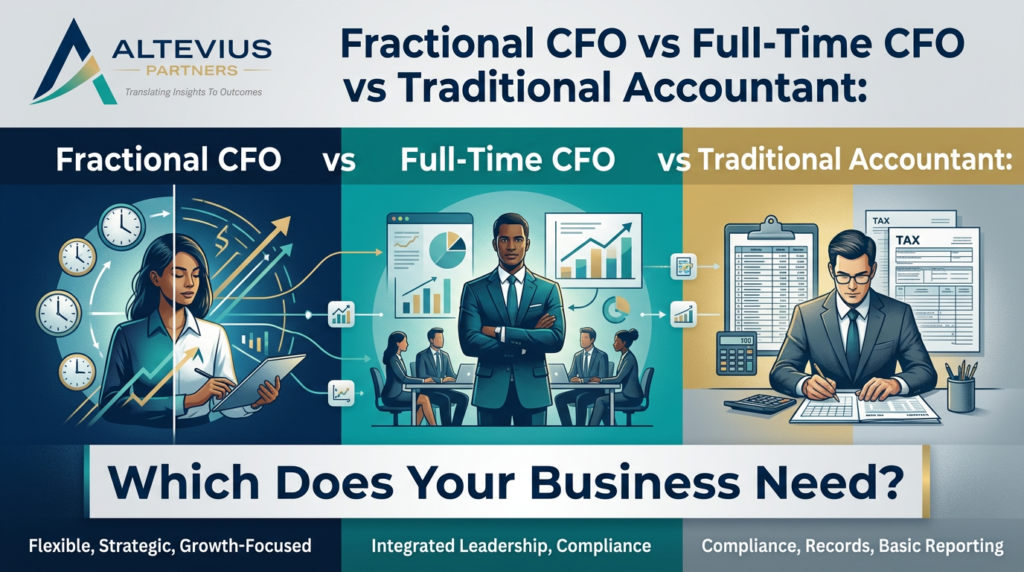
Read more: Fractional CFO vs Full-Time CFO vs Traditional Accountant: Which Does Your Business Need?
7. FP&A for Small Businesses Can Start With a Simple, Consistent Process
A small company does not need an expensive planning platform to begin improving financial decisions. It needs reliable records, a clear set of priorities, and a regular process for reviewing financial performance.
A practical starting point is to establish a monthly reporting schedule, identify the financial measures that matter most, and prepare forecasts for revenue, expenses, and cash.
Spreadsheets may work well when the business has relatively simple reporting needs. As the company grows, management can evaluate whether financial planning software would reduce manual work or improve coordination across departments.
External financial expertise may also be useful when the company needs forecasting, reporting, or analysis skills that its existing team cannot provide.
A practical implementation plan
During the first month, review the quality of financial records, identify major cash commitments, and prepare an initial forecast.
During the second month, establish a budget review process, investigate significant cost differences, and document the assumptions behind future sales.
During the third month, use the findings to improve purchasing, pricing, staffing, or investment decisions. Assign responsibility for each action and check whether the expected results occur.
The aim is not to complete a fixed checklist. It is to establish a financial process that management can maintain and improve as the business develops.
Where Altevius Partners may fit
For companies that require additional support, Altevius Partners can be evaluated according to its verified services and relevant expertise.
Before engaging any financial planning provider, business owners should clarify the work required, the information that must be supplied, the expected deliverables, and how recommendations will be reviewed.
Any claims about Altevius Partners’ specific capabilities should be confirmed directly with the firm. A suitable provider should be able to explain how its work addresses the company’s financial needs without promising results that cannot be substantiated.
Conclusion: Make Growth Financially Sustainable
A business can grow quickly and still make poor financial decisions. Large orders may consume working capital, additional staff may increase fixed costs before revenue arrives, and higher sales may conceal declining margins.
The practical value of FP&A is that it helps management examine these relationships before committing more money and resources.
Start with one area where uncertainty is affecting your decisions. It may be the profitability of a major customer, the cost of fulfilling new orders, or the amount of cash required for the next quarter. Gather the relevant figures, document the assumptions, and decide what action the findings support.
As the process becomes more consistent, financial planning can help the business evaluate opportunities with greater clarity and respond to problems sooner.
For SMEs considering external support, review the verified services offered by Altevius Partners and determine whether they fit the company’s current requirements. The priority is not to create more financial paperwork. It is to make the financial consequences of business decisions easier to understand before those decisions become expensive.
How can an SME tell whether its growth is actually making the business more profitable?
Look beyond monthly sales figures and compare the profit earned from each product, service, or customer group. A company might win larger contracts but earn less on each one because of discounts, overtime, delivery charges, or longer payment terms. For example, if a new contract increases revenue but requires extra staff and expensive express shipping, calculate the additional contribution after these costs. This helps you decide whether to renegotiate the contract, change the delivery terms, or pursue a different type of customer.
What financial numbers should an SME owner review before hiring more employees?
Start with the expected cost of the new employees, the additional revenue they can realistically support, and the cash available to cover their salaries during a slower period. Include employer contributions, recruitment, training, equipment, and other relevant expenses. Then estimate how long it may take for the new hires to contribute financially. If the business depends on a few unconfirmed sales to cover the added payroll, staged recruitment may be safer than hiring everyone immediately.
How can FP&A help an SME decide whether to accept a large customer order?
Calculate the order’s expected contribution, the cash required to fulfil it, and the time between paying suppliers and collecting customer payments. Include production capacity, overtime, delivery, and any customer specific requirements. An order may look attractive on paper but create a cash shortage if materials must be purchased immediately and payment arrives months later. FP&A for small businesses helps owners evaluate both the commercial return and the funding needed to deliver the order before committing resources.
How often should a small business update its financial forecast?
The right frequency depends on how quickly the company’s financial position can change. A business with predictable subscriptions and prompt customer payments may review its main forecast monthly. A distributor dealing with fluctuating stock costs, delayed receivables, and large supplier commitments may need a weekly cash forecast alongside its monthly profit forecast. Update assumptions when meaningful events occur, such as a major order being cancelled, a supplier changing prices, or a customer delaying payment. The aim is to keep decisions based on current information without creating unnecessary reporting work.
What should an SME look for when choosing an external FP&A partner such as Altevius Partners?
Look for a clear connection between the proposed financial work and the decisions your business needs to make. Ask how the provider would assess your current reporting, build forecasts from your actual operating data, investigate profitability, and communicate financial risks. Request examples of relevant deliverables, clarify who will maintain the process, and agree on how progress will be assessed. Before choosing Altevius Partners, verify its current service offerings and relevant experience directly with the firm. The important question is whether the proposed support will help your management team make specific decisions with greater financial clarity.