

Over the past decade of working alongside founders, scaling companies, and private equity teams, I have seen a recurring pattern. When capital was cheap and venture funding flowed freely, businesses could afford to run on pure optimism. Founders raised massive rounds, poured money into aggressive customer acquisition, and treated cash burn as a badge of honor. But today’s economic climate demands a completely different approach. Market cycles have tightened, venture capital due diligence has become rigorous, and survival now depends on absolute clarity over your numbers.
That fundamental shift is why Financial Planning for Startups has evolved from an optional back-office task into an absolute matter of survival. When uncertainty clouds the macro environment, smart founders stop guessing and start building rigorous operational frameworks.
Executive Summary
- Core Focus: Why modern startups must pivot from growth-at-all-costs to strict capital efficiency and structured Financial Planning for Startups.
- Key Takeaways:
- Traditional annual budgets are obsolete; companies must adopt rolling forecasts and advanced startup cash flow forecasting methods.
- Effective startup burn rate management and active startup budget optimization strategy protect runways during market downturns.
- Growing enterprises can leverage fractional fpa services for startups to secure institutional-grade Startup FP&A expertise without permanent full-time executive overhead.
- Partnering with specialized firms like Altevius Partners ensures rigorous financial modeling meets practical execution.
The Shift From Growth at All Costs to Financial Discipline
The reality of modern capital markets is harsh. The old playbook rules that rewarded top-line growth at the expense of unit economics no longer apply for early-stage and scale-up businesses. I remember sitting in a boardroom a few years ago where a tech founder proudly shared a 300% year-over-year revenue increase, completely ignoring the fact that they were losing three dollars for every single dollar of gross profit generated. Today, that business would likely struggle to survive its next bridge round.
Shifting market dynamics force founders to prioritize sustainable unit economics over vanity metrics. Investors no longer care about registered user counts or gross merchandise value if the underlying retention and contribution margins are bleeding cash. Redefining company growth through the lens of capital efficiency and smart resource allocation is the only way to build an enterprise that withstands macroeconomic shocks. When you establish strict financial discipline for growing companies, you stop treating capital as an infinite resource and start treating it as your most precious strategic asset.
Understanding Startup Burn Rate Management in Tight Markets
Tracking monthly cash outflow on a high-level P&L statement is only the first step in effective burn management. Many founders look at their bank balance at the end of the month, divide it by their average monthly spend, and assume they have a clear runway timeline. Unfortunately, that macro view hides dangerous operational realities.
Identifying hidden cost leaks in software subscriptions, operational overhead, and unoptimized payroll is where true financial hygiene begins. I once audited a mid-sized SaaS startup and discovered over twenty-five thousand dollars monthly leaking into redundant SaaS tools that multiple departments had purchased independently without centralized approval. Calculating your true net burn versus gross burn helps you protect your core business operations. Gross burn shows your total cash outlays, while net burn factors in incoming revenues, but understanding the composition of those outflows is what lets you trim fat without cutting muscle.
How to Extend Startup Runway Without Stifling Innovation
When fundraising windows narrow, panic often sets in. Founders immediately look at cutting staff or freezing product development, which often kills the very engine driving the company forward. There are much smarter, practical strategies to stretch existing capital reserves without halting product development or core hiring.
Start by renegotiating vendor contracts and restructuring fixed overhead into variable operational expenses. Most software vendors, cloud hosting providers, and agency partners are open to flexible payment terms or volume-based pricing when they understand you are optimizing cash flow. Evaluating optimal capital deployment timelines ensures you reach your next funding milestone comfortably. By staging major capital outlays around proven revenue milestones rather than arbitrary calendar dates, you protect your runway and maintain team momentum.
Core Financial Planning and Analysis for Startups
Building a Rolling Financial Forecast for Dynamic Markets
Rigid annual budgets belong in the museum of corporate history. In a fast-moving market, an annual budget built in January is usually obsolete by March. Moving away from rigid annual budgets toward agile, quarterly-updated predictive models allows leadership teams to steer the ship with real-time instruments.
Factoring in macro volatility and changing customer acquisition costs directly into your financial forecasts keeps your projections tethered to reality. If acquisition costs spike due to increased platform advertising competition, your forecast should reflect that immediately. Creating multiple scenario models to prepare for unexpected revenue dips or delayed funding rounds gives you predefined playbooks. When an unexpected market shift hits, you do not need to scramble; you simply execute the contingency model you prepared months prior.
Essential Startup Financial Metrics to Track Daily
Data overload is real. Founders often track dozens of vanity metrics that look great in pitch decks but offer zero operational value. Monitoring key indicators like customer lifetime value, acquisition payback periods, and gross margins gives you a clear pulse on business health.
Setting up real-time dashboards to give leadership instant visibility into cash flow health eliminates end-of-month surprises. Using actionable data instead of historical backward-looking reports allows you to make fast adjustments. If your acquisition payback period stretches beyond historical norms, your financial planning and analysis for startups framework should trigger immediate reviews of marketing spend efficiency before cash reserves take a direct hit.
Advanced Startup Cash Flow Forecasting Methods
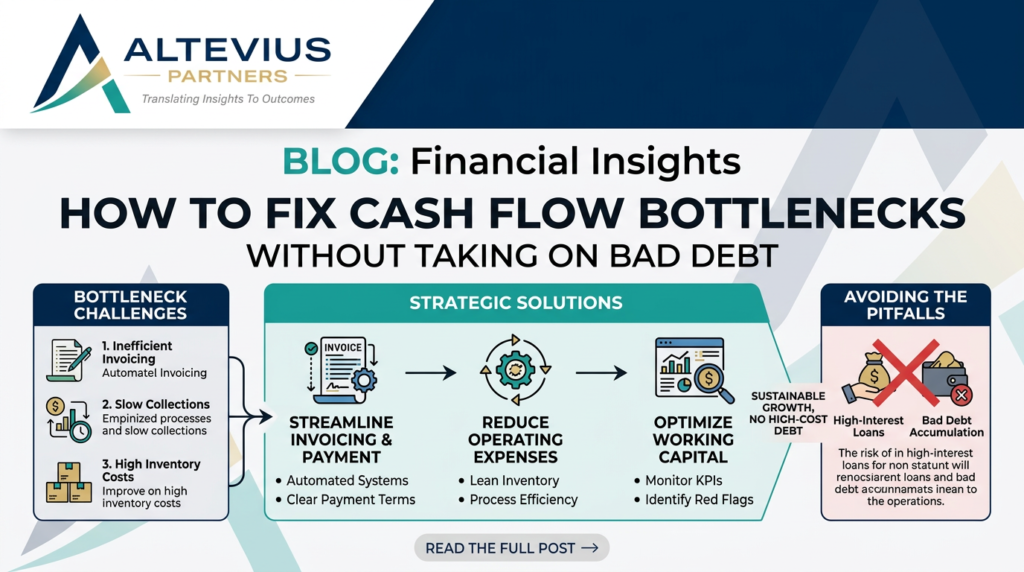
Cash flow timing is frequently what sinks otherwise profitable businesses. A company can show strong revenue growth on paper, but if clients take ninety days to pay invoices while payroll is due every thirty days, insolvency looms. Implementing direct cash flow mapping to track daily cash inflows and outflows accurately bridges this gap.
Accounting for delayed customer receivables and seasonal revenue fluctuations in your cash buffer protects you against sudden liquidity crunches. For instance, B2B companies often see enterprise collections freeze during fiscal year-end or summer holiday months. Stress testing your bank accounts against unexpected macroeconomic shocks or delayed enterprise sales cycles ensures your business can endure a major client walking away or a contract getting delayed by a quarter.
Managing Cash Burn During Economic Downturns
When a downturn hits, swift and calculated action is required. Practical playbooks for reducing operational expenditures quickly without damaging team morale or output start with clear transparency. When leadership communicates openly about why certain cost-cutting measures are necessary, teams rally behind the mission.
Prioritizing core revenue-generating projects over experimental features during lean periods focuses your engineering and product teams where it matters most. Maintaining open communication lines with existing investors regarding capital preservation plans builds immense trust. Investors respect founders who spot trouble early and present proactive solutions over those who hide bad news until the bank account hits zero.
Implementing a Startup Budget Optimization Strategy
Budgeting should never be a top-down mandate driven by guesswork. Auditing every department’s spending habits to align resource allocation directly with revenue impact ensures every dollar spent pulls its weight.
Eliminating redundant software tools and redundant operational processes that drain working capital uncovers immediate savings. Establishing clear spending guardrails for department heads enforces company-wide financial discipline for growing companies without suffocating department autonomy. When department leaders understand unit economics and budget constraints, they make smarter purchasing and hiring choices.
Leveraging Fractional FP&A Services for Startups
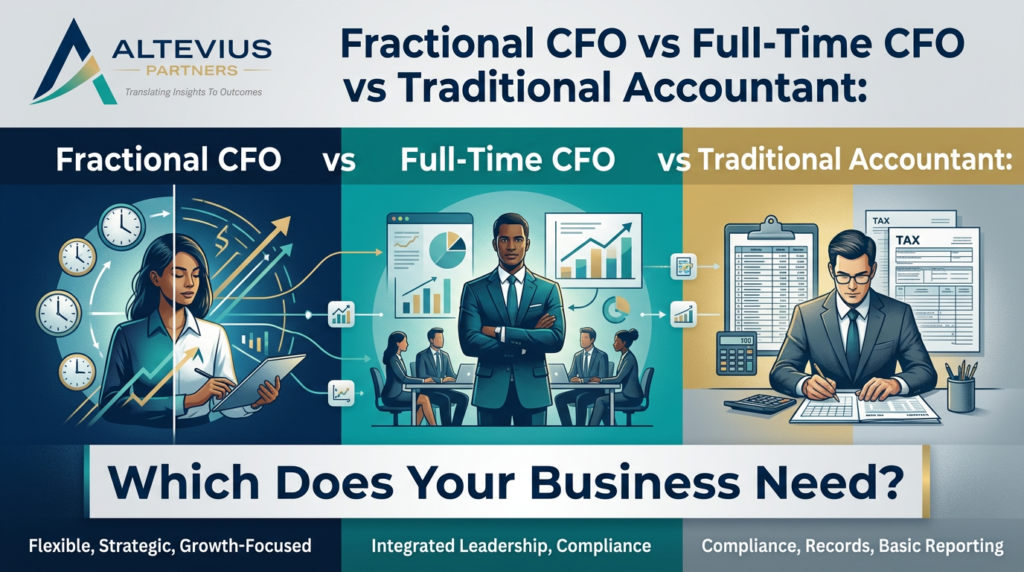
Early and growth-stage companies rarely need a full-time Chief Financial Officer on day one. A seasoned CFO commands a massive salary and equity package that can strain an early-stage budget. However, relying solely on a junior bookkeeper leaves management without strategic financial foresight.
How hiring fractional financial leadership brings institutional-grade expertise at a fraction of the cost solves this dilemma. Unlocking sophisticated forecasting, valuation preparation, and investor reporting without permanent overhead gives startups the strategic muscle they need to navigate complex fundraising rounds or operational restructurings. This approach delivers top-tier expertise exactly when you need it.
Partnering With Altevius Partners for Sustainable Growth
Navigating financial transformation, rigorous modeling, and investor readiness requires specialized guidance. This is where partnering with Altevius Partners changes the trajectory for growing enterprises.
How Altevius Partners combines rigorous financial modeling with hands-on strategic execution helps founders transform raw data into a compelling narrative for investors. Turning complex data points into actionable insights builds investor trust and secures funding. Connecting long-term business strategy with daily financial discipline ensures that as your business scales, your financial foundations remain unshakeable, allowing you to grow on your own terms.
When should an early-stage startup transition from basic bookkeeping to formal financial planning and analysis?
Many founders make the mistake of waiting until they are actively raising a Series A or B round to bring in financial structure. In practice, you need structured financial planning the moment you start spending outside capital or managing more than two revenue streams. Bookkeeping only tells you where your money went last month; financial planning and analysis tells you where your cash will be six months from now. If your monthly burn rate starts exceeding your internal visibility, meaning you are regularly surprised by your bank balance, it is time to implement rolling forecasts and dynamic cash flow mapping.
How does a fractional financial leader differ from a traditional full-time Chief Financial Officer?
A full-time Chief Financial Officer is a massive fixed cost, often requiring a six-figure salary plus significant equity grants that early-stage ventures simply cannot sustain. A fractional financial leader provides the exact same institutional-grade expertise, board-level reporting, and fundraising strategy on a flexible, part-time retainer model. Instead of sitting in your office forty hours a week, a fractional partner steps in during critical phases, such as building investor-ready models, restructuring operational costs, or preparing for due diligence, giving you elite guidance without permanent payroll bloat.
What is the difference between gross burn and net burn, and why do investors scrutinize net burn more closely?
Gross burn is your total cash outflow every month, covering payroll, software licenses, office space, and marketing spend. Net burn is what remains after you subtract your incoming monthly revenue from that gross total. Investors care deeply about net burn because it reveals your capital efficiency. A company with a high gross burn can still be highly investable if its net burn is shrinking rapidly due to strong customer retention and rising revenue. However, if your net burn matches your gross burn month after month, it signals that your product lacks monetization power.
How can a growing company extend its runway without freezing product development or laying off core team members?
When capital tightens, knee-jerk reactions usually involve cutting engineering teams or pausing marketing. A much smarter approach starts with vendor and overhead restructuring. Audit every software subscription, switch annual software commitments to flexible terms where possible, and negotiate delayed payment structures with enterprise suppliers. Furthermore, look at your variable operational expenses, such as outsourced agency retainers or non-essential administrative tools, to trim waste. This lets you preserve your core product engine and keep your top talent fully intact.
What makes a startup financial model investor-ready versus just a spreadsheet of hopeful guesses?
An investor-ready financial model is built on transparent assumptions, historical unit economics, and rigorous scenario planning rather than hockey-stick revenue curves that lack foundation. Institutional investors look for models that break down customer acquisition costs, lifetime value, and churn rates with realistic cohort analyses. More importantly, a credible model includes downside scenario toggles. When an investor asks how your business performs if market growth slows by twenty percent over the next two quarters, your model should be able to answer that question instantly with dynamic forecasting.